
This guide ranks the 12 best windows for cold climates from the brands we install, with the specs that matter for each one. You’ll also learn which window styles, frame materials, and glass packages keep heat inside best. If you live in a colder part of Southern California, such as the foothills or high desert, there’s a local section near the end.
Quick Picks: Best Windows for Cold Climates at a Glance
| Window | Frame | Triple-Pane Option | Price Tier | Best For |
|---|---|---|---|---|
| Marvin Elevate | Fiberglass outside, wood inside | Yes | Mid to high | Best overall |
| Marvin Ultimate | Clad wood or all wood | Yes | Very high | Custom and luxury homes |
| Marvin Essential | All fiberglass | Ask your dealer | Mid | All-fiberglass value |
| Marvin Modern | High-density fiberglass | Yes | Very high | Modern homes |
| Andersen A-Series | Fibrex outside, wood inside | Yes | High | Best composite option |
| Andersen 400 Series | Vinyl-clad wood | Limited | Mid | Wood look on a budget |
| Andersen 100 Series | Fibrex composite | No | Low to mid | Budget composite |
| Andersen E-Series | Aluminum-clad wood | Limited | High | Most custom options |
| Milgard Ultra | Fiberglass | No (in CA) | Mid | Fiberglass value |
| Milgard Tuscany | Vinyl | No (in CA) | Low to mid | Premium vinyl |
| Milgard Trinsic | Vinyl | No (in CA) | Low to mid | Slim vinyl frames |
| Euroline Thermal Steel | Thermally broken steel | Ask your dealer | Very high | Steel windows in cold areas |
What Makes a Window Good for Cold Weather
Every window on this list was judged on four things. These are the same four things you should check on any quote.
- Low U-factor: The U-factor shows how fast heat escapes through the window. Lower numbers keep more heat inside.
- Better glass: Triple-pane glass or a high-end double-pane package with two Low-E coatings cuts heat loss the most.
- Gas fill and warm spacers: Argon or krypton gas between the panes slows heat loss, and warm-edge spacers keep the glass edges from getting cold.
- An insulating frame with tight seals: Fiberglass, wood, composite, and vinyl block cold better than standard metal. Tight seals stop drafts.
The 12 Best Windows for Cold Climates
1. Marvin Elevate (Best Overall)
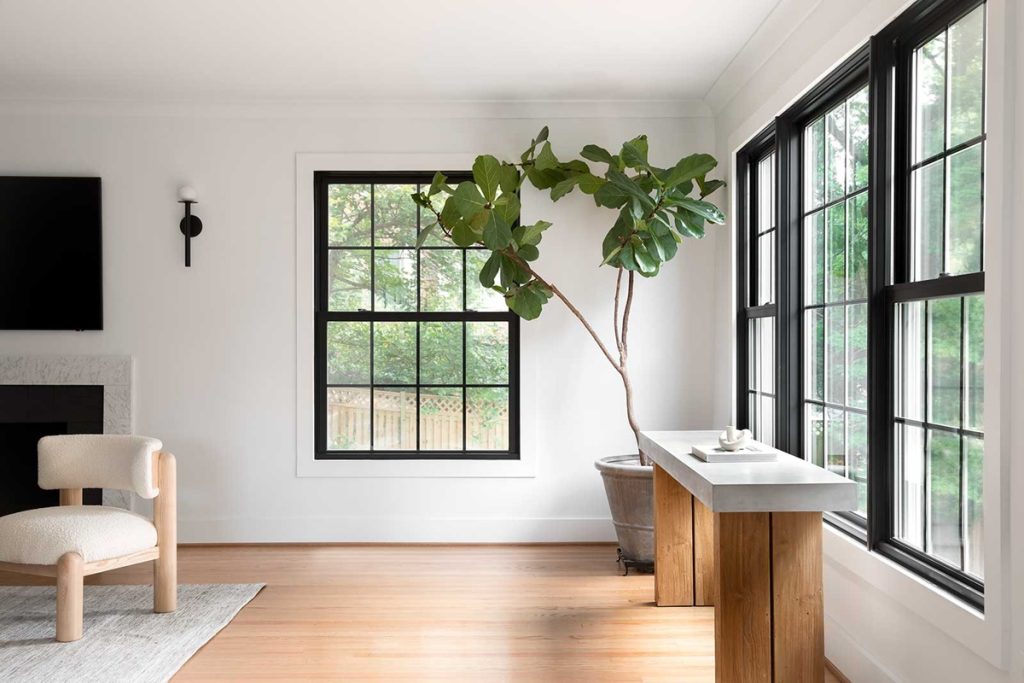
Elevate pairs a tough Ultrex fiberglass exterior with a warm wood interior. Fiberglass barely moves in cold weather, so the seals stay tight year after year. It’s our top pick for most homeowners who want strong cold-weather performance and a wood look inside.
| Spec | Details |
| Frame | Fiberglass exterior, wood interior |
| Glass options | Dual-pane Low-E and triple-pane |
| Styles | Casement, awning, double-hung, picture, gliding |
| Warranty | 20 years on glass, 10 years on parts |
| Price tier | Mid to high |
- Pros: Strong, stable frame with a real wood interior. Its best double-pane double-hung reaches a U-factor of about 0.24.
- Cons: Fewer custom sizes and shapes than Marvin’s top line.
Best for: Homeowners who want the best mix of warmth, looks, and price. Learn more about Marvin windows.
2. Marvin Ultimate (Best for Custom and Luxury Homes)
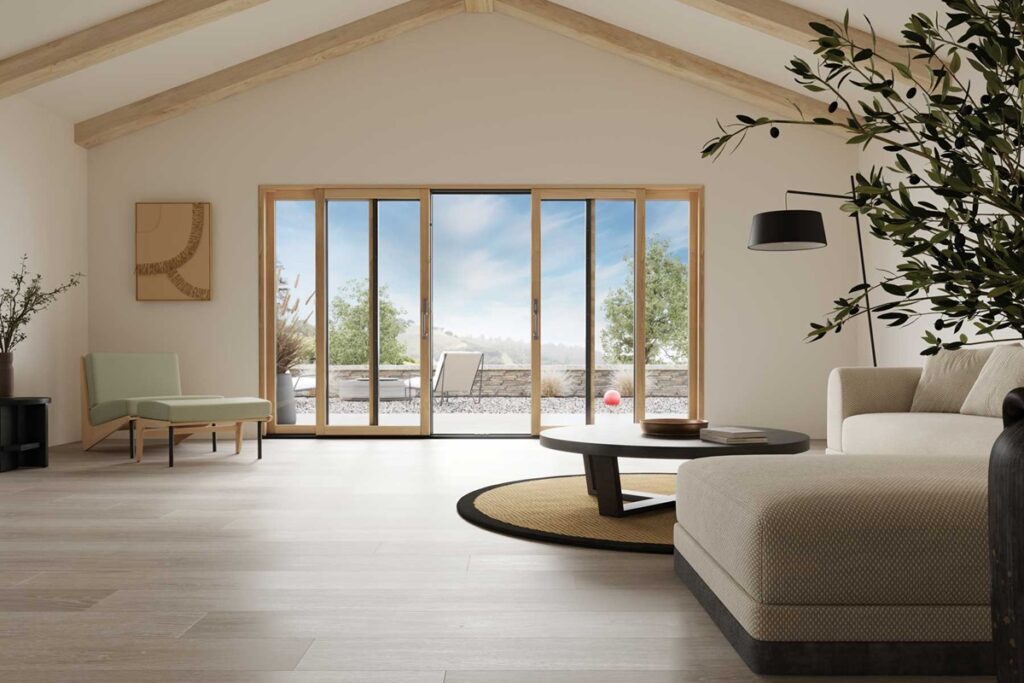
Ultimate is Marvin’s top line. It comes in aluminum-clad wood or all wood, with nearly any size, shape, or color you want. Triple-pane glass is available for the coldest rooms.
| Spec | Details |
| Frame | Aluminum-clad wood or all wood |
| Glass options | Dual-pane Low-E and triple-pane |
| Styles | Nearly every style, including large custom units |
| Warranty | 20 years on glass, 10 years on parts |
| Price tier | Very high |
- Pros: Top craftsmanship, endless design choices, and triple-pane options.
- Cons: One of the most expensive windows on the market.
Best for: Custom homes and remodels where design matters as much as performance. Our Marvin windows review covers this line in detail.
3. Marvin Essential (Best All-Fiberglass Option)
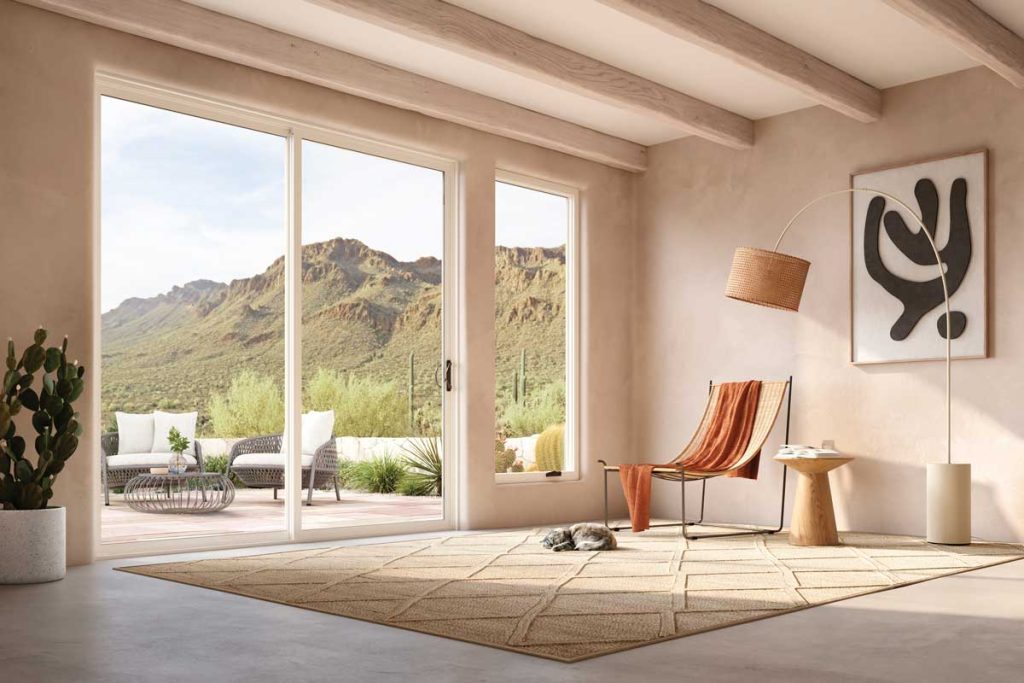
Essential uses fiberglass inside and out. It doesn’t rot, warp, or need painting, and it holds its shape in freezing weather. You get Marvin quality at a lower price than its wood lines.
| Spec | Details |
| Frame | All fiberglass |
| Glass options | Dual-pane Low-E (ask about triple-pane) |
| Styles | Casement, awning, double-hung, picture, gliding |
| Warranty | 20 years on glass, 10 years on parts |
| Price tier | Mid |
- Pros: Very low upkeep and a stable frame that keeps seals tight.
- Cons: Fewer colors and no wood interior.
Best for: Homeowners who want strong cold-weather performance with almost no maintenance.
4. Marvin Modern (Best for Modern Homes)
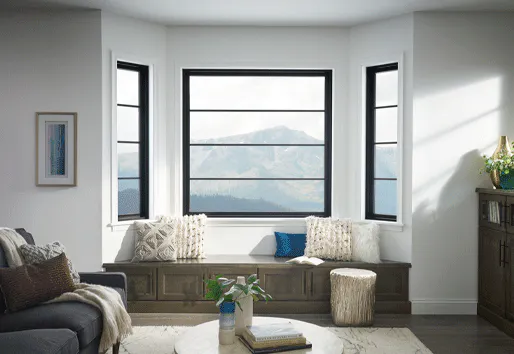
Marvin Modern uses high-density fiberglass shaped to look like slim aluminum. You get the clean, thin lines of a modern window without the cold frame of standard metal. Triple-pane glass is available.
| Spec | Details |
| Frame | High-density fiberglass |
| Glass options | Dual-pane Low-E and triple-pane |
| Styles | Casement, awning, picture, sliding doors |
| Warranty | 20 years on glass, 10 years on parts |
| Price tier | Very high |
- Pros: Slim modern look with far better insulation than aluminum.
- Cons: High price and a limited style range.
Best for: Contemporary homes that want big glass and thin frames in a cold area.
5. Andersen A-Series (Best Composite Option)
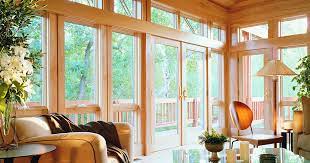
A-Series uses a Fibrex composite exterior and a wood interior. It’s Andersen’s best performer for cold weather, and triple-pane glass with Low-E coatings on two surfaces is available. Its double-hung windows average a U-factor of about 0.22 to 0.26.
| Spec | Details |
| Frame | Fibrex composite exterior, wood interior |
| Glass options | Dual-pane Low-E, PassiveSun, triple-pane |
| Styles | Casement, awning, double-hung, picture |
| Warranty | 20 years on glass, 10 years on non-glass parts |
| Price tier | High |
- Pros: Excellent insulation, many colors, and a glass option that lets in winter sun for free heat.
- Cons: Andersen’s warranty doesn’t cover labor.
Best for: Homeowners who want a top-tier cold-weather window with a classic wood interior. See our Andersen windows page for more.
6. Andersen 400 Series (Best Wood Look on a Budget)
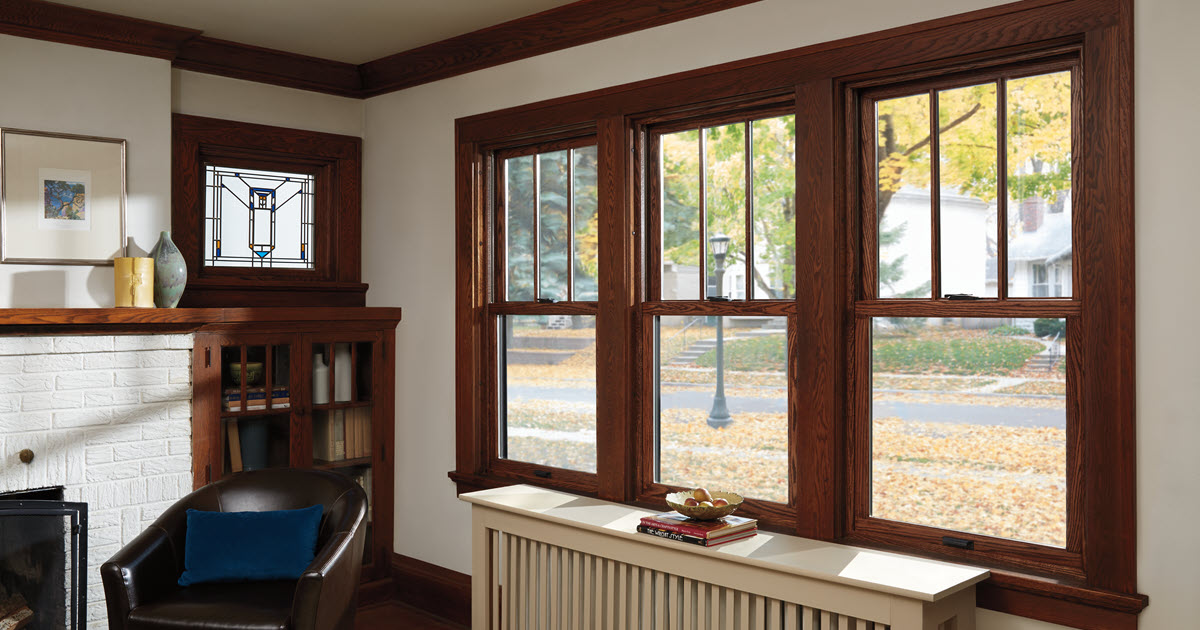
The 400 Series is Andersen’s most popular line. It has a solid wood interior and a vinyl-clad exterior, so you get the warmth of wood with less outdoor upkeep. Its standard double-hung averages a U-factor of about 0.30 to 0.31.
| Spec | Details |
| Frame | Wood interior, vinyl-clad exterior |
| Glass options | Dual-pane Low-E, with triple-pane on select products |
| Styles | Casement, awning, double-hung, bay and bow, sliding, picture |
| Warranty | 20 years on glass, 10 years on non-glass parts |
| Price tier | Mid |
- Pros: Real wood inside at a fair price, with many styles available.
- Cons: Doesn’t insulate as well as the A-Series.
Best for: Mild cold areas where you want wood interiors without paying for a premium line.
7. Andersen 100 Series (Best Budget Composite)
The 100 Series uses Fibrex, a mix of wood fiber and vinyl. It’s stronger and more stable than standard vinyl, and it costs less than most fiberglass windows.
| Spec | Details |
| Frame | Fibrex composite |
| Glass options | Dual-pane Low-E |
| Styles | Casement, awning, single-hung, sliding, picture |
| Warranty | 20 years on glass, 10 years on non-glass parts |
| Price tier | Low to mid |
- Pros: Good insulation and stability for the price.
- Cons: No wood interior and no triple-pane option.
Best for: Budget projects that still need a solid cold-weather window.
8. Andersen E-Series (Most Customizable)
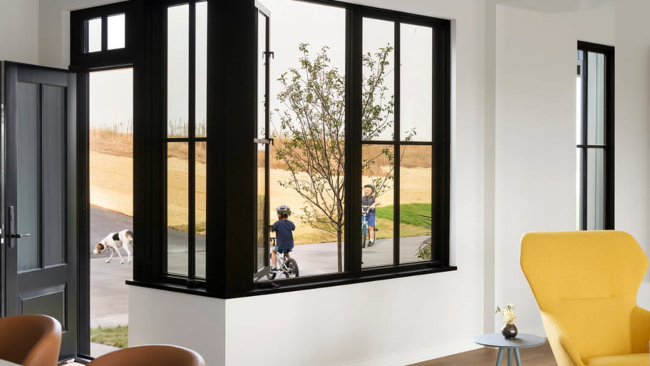
E-Series is Andersen’s most custom line. It has an aluminum-clad wood frame with dozens of colors, shapes, and sizes. The wood interior insulates well, and the aluminum shell protects it from weather.
| Spec | Details |
| Frame | Aluminum-clad wood |
| Glass options | Dual-pane Low-E, with triple-pane on select products |
| Styles | Nearly every style, including custom shapes |
| Warranty | 20 years on glass, 10 years on non-glass parts |
| Price tier | High |
- Pros: Huge design range and a durable exterior.
- Cons: Higher price, and triple-pane isn’t offered on every unit.
Best for: Architect-designed homes that need special shapes or colors.
9. Milgard Ultra (Best Fiberglass Value)
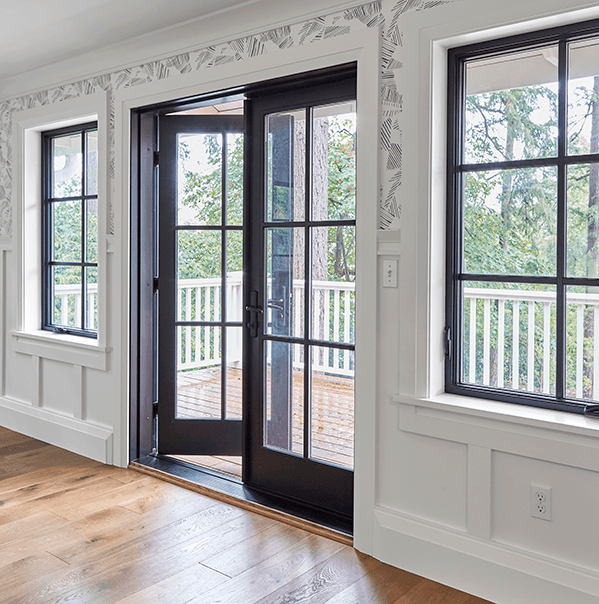
Ultra is Milgard’s fiberglass line. Fiberglass expands and shrinks very little in the cold, so the window stays sealed. Instead of triple-pane glass, Milgard offers a “4th Surface” Low-E coating that brings double-pane glass close to triple-pane performance. Milgard’s triple-pane glass is only made at its Pacific Northwest plants, so it isn’t offered in California.
| Spec | Details |
| Frame | Fiberglass |
| Glass options | Dual-pane Low-E with optional 4th Surface coating |
| Styles | Casement, awning, single-hung, sliding, picture |
| Warranty | Full lifetime warranty, including parts and labor |
| Price tier | Mid |
- Pros: Strong frame and one of the best warranties in the industry.
- Cons: No triple-pane option in California.
Best for: Homeowners who want fiberglass strength and a lifetime warranty. Learn more about Milgard windows.
10. Milgard Tuscany (Best Premium Vinyl)
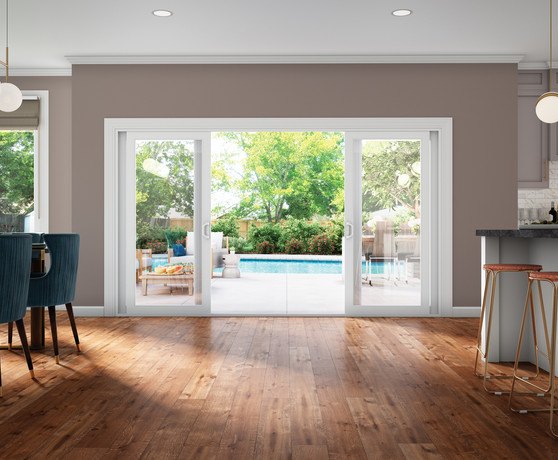
Tuscany is Milgard’s top vinyl line. Its frames have hollow chambers inside that trap air and slow heat loss. It’s a good choice when you want solid performance at a lower price.
| Spec | Details |
| Frame | Vinyl |
| Glass options | Dual-pane Low-E with optional 4th Surface coating |
| Styles | Casement, awning, single-hung, sliding, picture |
| Warranty | Full lifetime warranty, including parts and labor |
| Price tier | Low to mid |
- Pros: Good insulation for the price and a lifetime warranty.
- Cons: Thicker frames than fiberglass, and fewer colors.
Best for: Whole-house replacements on a budget.
11. Milgard Trinsic (Best Slim Vinyl)
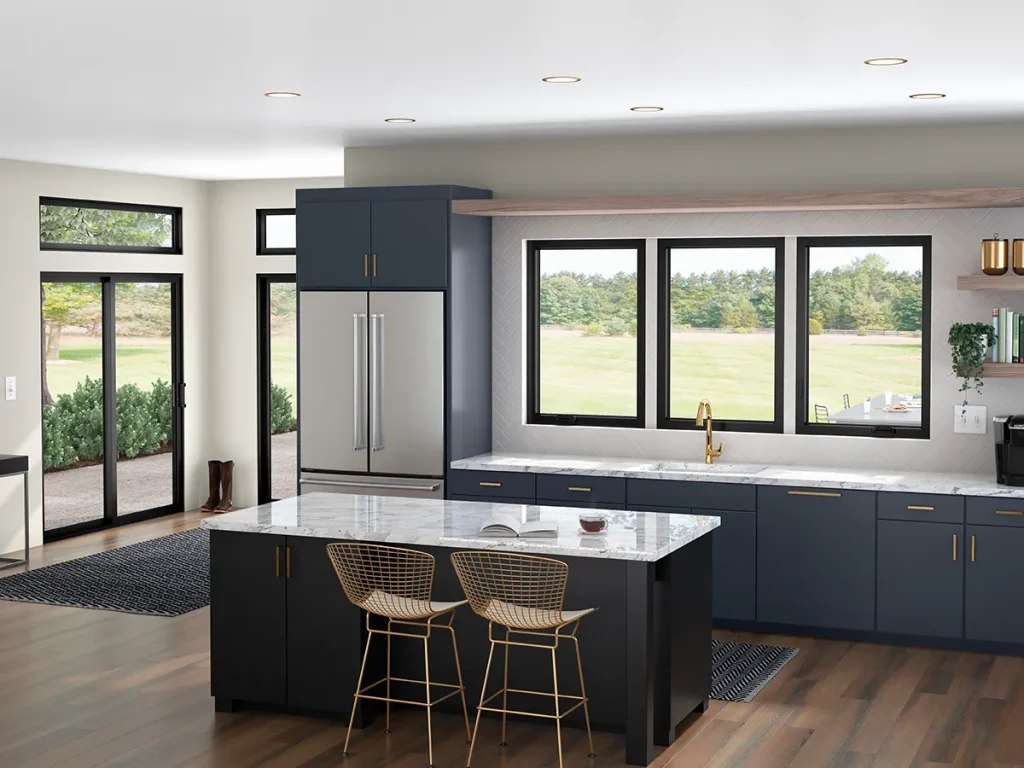
Trinsic is a vinyl window with a thinner frame, so you see more glass. It gives you a cleaner, more modern look than standard vinyl.
| Spec | Details |
| Frame | Vinyl, narrow profile |
| Glass options | Dual-pane Low-E with optional 4th Surface coating |
| Styles | Casement, awning, single-hung, sliding, picture |
| Warranty | Full lifetime warranty, including parts and labor |
| Price tier | Low to mid |
- Pros: More glass, modern lines, and a low price.
- Cons: Not as stiff as fiberglass for very large windows.
Best for: Modern-style homes on a budget.
12. Euroline Thermal Steel (Best Steel Window for Cold Weather)
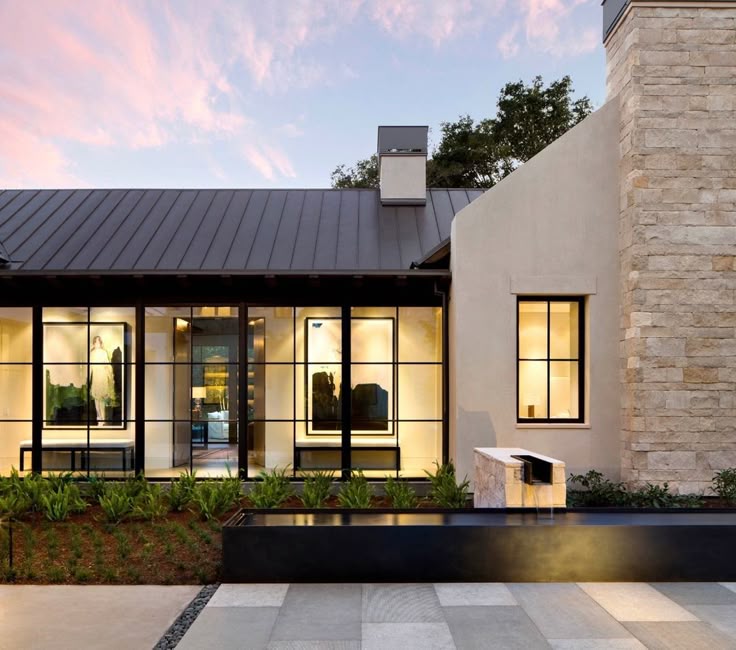
Standard steel windows let cold travel straight through the frame. Euroline Thermal Steel adds a thermal break, an insulating barrier inside the frame that blocks heat flow. You get the thin, classic look of steel with much better performance in cold weather.
| Spec | Details |
| Frame | Thermally broken steel |
| Glass options | Insulated glass (ask about triple-pane) |
| Styles | Casement, fixed, French doors, custom shapes |
| Warranty | Covers rust and structural failure |
| Price tier | Very high |
- Pros: Slim steel lines with real insulation, and made in Europe.
- Cons: One of the most expensive options.
Best for: Spanish, Tudor, and modern homes that want true steel windows. Learn more about Euroline steel windows.
Best Window Styles for Cold Weather
The way a window opens affects how well it seals. Windows that press against the frame when closed block the most cold air.
| Window Style | Seal Tightness | Draft Risk | Best Use |
| Picture (fixed) | Excellent | Very low | Views and large openings |
| Casement | Excellent | Low | Bedrooms, kitchens, living rooms |
| Awning | Excellent | Low | Bathrooms, above sinks, basements |
| Double-hung | Good | Medium | Traditional homes |
| Sliding | Fair | Medium to high | Wide, short openings |
Casement and awning windows lock in several places and squeeze against their seals when closed. That’s why they beat sliding and double-hung windows in cold weather.
Best Frame Materials for Cold Climates
The frame makes up about a quarter of a window’s surface. A frame that conducts cold can undo the work of good glass.
| Frame Material | Insulation | Cold-Weather Stability | Upkeep | Cost |
| Fiberglass | Excellent | Excellent | Very low | Mid to high |
| Clad wood | Excellent | Very good | Low | Mid to high |
| Composite (Fibrex) | Very good | Very good | Very low | Mid |
| Vinyl | Good | Good | Very low | Low |
| Thermally broken steel | Good | Excellent | Low | Very high |
| Thermally broken aluminum | Fair | Excellent | Very low | Mid to high |
Fiberglass is the top choice for most cold-climate homes. For a closer look at the two most common options, read our guide to fiberglass vs. vinyl windows. Aluminum windows like Fleetwood windows are great for big modern openings, but you’ll want a thermally broken frame and strong glass in colder areas.
Double-Pane vs. Triple-Pane for Cold Climates
Triple-pane glass adds a third layer and a second gas-filled gap. It keeps more heat inside, but it also adds weight and cost.
| Feature | Double-Pane (Low-E and Argon) | Triple-Pane (Low-E and Argon) |
| Typical U-factor | 0.24 to 0.30 | 0.18 to 0.23 |
| Condensation risk | Low | Very low |
| Weight | Standard | About 30% to 50% heavier |
| Noise blocking | Good | Better |
| Cost | Standard | Higher |
Our take: Triple-pane is worth it in places with long, hard winters. In milder cold areas, including most of Southern California, a good double-pane window with two Low-E coatings usually gives you nearly the same comfort for less money.
How to Read the Label for Cold-Weather Performance
Every new window has a label from the National Fenestration Rating Council (NFRC). Use these targets when you compare quotes.
| Rating | What It Measures | Target for Cold Climates |
| U-factor | How fast heat escapes | 0.22 or lower in very cold areas, 0.30 or lower in milder ones |
| SHGC | How much sun heat gets in | Higher on south-facing windows to collect winter sun |
| Visible Transmittance (VT) | How much daylight gets in | 0.40 or higher |
| Air Leakage | How much air passes through | 0.30 or lower |
The ENERGY STAR window program lists the current U-factor and SHGC targets for each climate zone.
Cold Spots in Southern California
Southern California isn’t known for cold weather, but some areas get much colder at night than people expect.
- Foothill neighborhoods: Homes in Altadena and the upper parts of Pasadena can see nighttime lows in the 30s during winter.
- Santa Clarita and nearby canyons: Cold air settles in valleys overnight, so temperatures can swing 30 degrees or more in a day.
- Inland Ventura County: Areas away from the coast get frost on clear winter nights.
These same homes also get hot summers. That’s why the right window here has to block winter heat loss and summer sun at the same time. California’s Title 24 energy code requires a U-factor of 0.30 or lower and an SHGC of 0.23 or lower for most homes. You can read the full rules on the California Energy Commission’s building standards page.
Every window on our list can meet Title 24 with the right glass. For the summer side of the problem, see our guide to the best energy-saving windows for hot climates.
Installation Mistakes That Let Cold In
Even the best window loses heat if it’s installed poorly. These are the most common mistakes:
- Gaps around the frame: Small gaps between the window and the wall let cold air in. A good installer fills them with low-expansion foam and sealant.
- No insulation in the opening: An empty gap around the frame becomes a path for cold. This space must be insulated.
- Poor flashing: Missing or bad flashing lets water behind the wall, which leads to rot and mold.
- Out-of-square frames: A window set even slightly crooked won’t seal properly, so drafts slip through.
Cold glass also causes moisture to form inside. Our article on condensation on windows explains how to reduce it. If your current windows are drafty or foggy between the panes, read our guide on when to replace your windows.
Frequently Asked Questions
What Is the Best Window for Cold Climates?
For most homes, the Marvin Elevate is our top pick because it combines a stable fiberglass exterior, a wood interior, and a triple-pane option. Andersen A-Series is a close second. Both perform best as casement or awning windows.
Are Triple-Pane Windows Worth It?
Triple-pane windows are worth it in areas with long, freezing winters. In milder climates like most of Southern California, a double-pane window with two Low-E coatings and argon gas usually gives you nearly the same comfort for less money.
Is Vinyl or Fiberglass Better for Cold Weather?
Fiberglass is better. It expands and shrinks much less than vinyl in temperature swings, so its seals stay tight longer. Vinyl still performs well and costs less, which makes it a good budget choice.
What U-Factor Should I Look for in a Cold Climate?
Look for a U-factor of 0.22 or lower in very cold areas. In milder cold areas, 0.30 or lower works well and also meets California’s Title 24 limit.
Do Casement Windows Keep Out Cold Better Than Double-Hung?
Yes. Casement windows press against their seals when closed and lock in several places. Double-hung windows have sliding sashes with more gaps, so they let in more air over time.
Get the Right Windows for Your Home’s Climate
Fusion Windows and Doors has installed windows and doors in Los Angeles for more than 20 years. We’ll help you choose the right frame and glass for your home’s cold nights and hot days, and make sure every window meets Title 24. Get a free quote to compare your options.