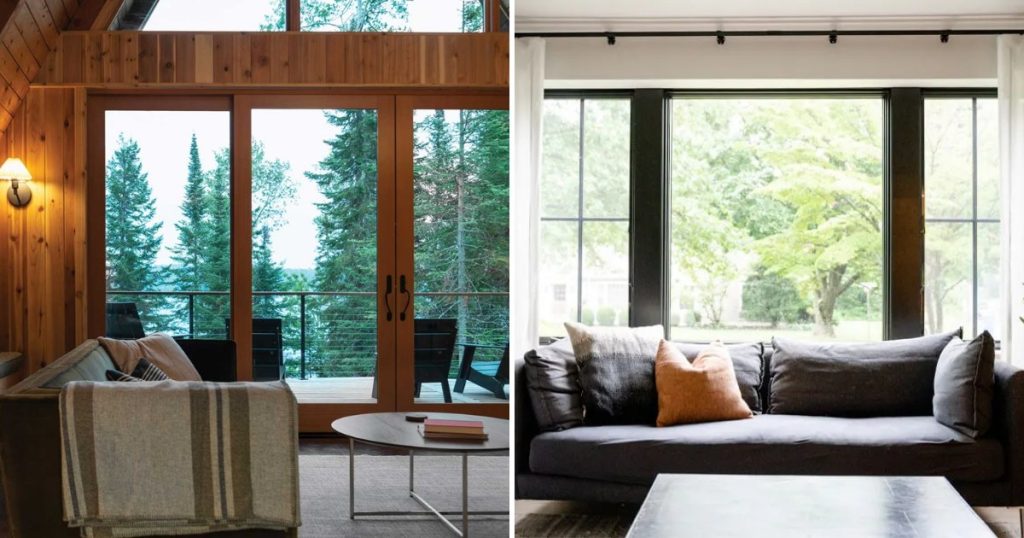
Marvin and Andersen are two of the biggest names in windows. Both make high-quality products, but they differ in materials, design options, and price.
This guide compares the two brands side by side. You’ll see how their materials differ, how each product line stacks up, and what you can expect to pay in Los Angeles.
Marvin vs. Andersen at a Glance
| Feature | Marvin | Andersen |
| Main exterior materials | Ultrex fiberglass and aluminum cladding | Fibrex composite, vinyl cladding, and aluminum cladding |
| Wood interiors | Elevate, Vivid, and Ultimate lines | 400, A-Series, and E-Series |
| Price range | Mid to very high | Low to high |
| Custom sizes | Excellent | Good to excellent |
| Color choices | Many | Many |
| Glass warranty | 20 years | 20 years |
| Parts warranty | 10 years | 10 years |
| Best for | Stability, slim frames, and custom or historic work | More price options and wide availability |
Materials and Construction
The biggest difference between these brands is what their windows are made of. Materials decide how long a window lasts and how well it holds its seal.
Marvin: Ultrex Fiberglass
Marvin’s main exterior material is Ultrex, its own type of fiberglass. Ultrex expands and shrinks at almost the same rate as glass.
That matters in hot places like Los Angeles. When the frame and glass move together, the seals stay tight longer.
Marvin’s top lines use real wood inside with an extruded aluminum shell outside. This gives you a warm interior and a tough, weather-resistant exterior.
Andersen: Fibrex, Vinyl, and Wood
Andersen uses different materials in different series. The main ones are:
- Fibrex: A mix of about 40% wood fiber and 60% plastic. It’s used in the 100 Series, the A-Series, and Renewal by Andersen windows.
- Vinyl cladding: A vinyl shell over wood, used in the 400 Series.
- Aluminum cladding: A metal shell over wood, used in the E-Series.
Fibrex is stronger and more stable than plain vinyl. But some multi-material windows can expand at different rates in big temperature swings.
| Material | Brand | Strength | Heat Stability | Upkeep |
| Ultrex fiberglass | Marvin | Very high | Excellent | Very low |
| Fibrex composite | Andersen | High | Very good | Very low |
| Vinyl-clad wood | Andersen | Medium | Good | Low |
| Aluminum-clad wood | Both | High | Very good | Low |
For a deeper look at frame materials, read our guide to fiberglass vs. vinyl windows.
Line-by-Line Comparisons
Each brand has entry, mid-range, and luxury lines. Here’s how they match up.
Budget and Entry-Level: Andersen 100 Series vs. Marvin Essential
| Feature | Andersen 100 Series | Marvin Essential |
| Material | Fibrex composite | All Ultrex fiberglass |
| Frame profile | Medium | Slimmer |
| Glass area | Good | More glass |
| Color choices | More options | Fewer options |
| Price | Lower | Higher |
The Andersen 100 Series costs less and comes in more colors. Marvin Essential has slimmer frames, more glass, and the toughness of pure fiberglass.
Our pick: Choose the 100 Series for the lowest price. Choose Essential if you want a stronger frame that holds up better in heat.
Mid-Range: Andersen 400 Series vs. Marvin Elevate
| Feature | Andersen 400 Series | Marvin Elevate |
| Interior | Wood | Wood |
| Exterior | Vinyl cladding | Ultrex fiberglass |
| Heat stability | Good | Excellent |
| Corner joints | Standard | Clean mitered corners |
| Upkeep | Low | Very low |
| Price | Mid | Mid to high |
Both give you a real wood interior. Marvin Elevate’s fiberglass exterior handles heat better and has cleaner corner joints.
Our pick: Marvin Elevate is the stronger window for Southern California’s sun. The 400 Series is a good choice if you want wood at a lower price.
Luxury and Custom: Andersen A-Series and E-Series vs. Marvin Ultimate and Modern
| Feature | Andersen A-Series | Andersen E-Series | Marvin Ultimate | Marvin Modern |
| Exterior | Fibrex | Aluminum | Aluminum or wood | High-density fiberglass |
| Interior | Wood | Wood | Wood | Fiberglass |
| Custom sizing | Good | Excellent | Excellent | Good |
| Historic accuracy | Good | Very good | Excellent | Not designed for it |
| Best for | Classic homes | Custom colors and shapes | Historic and luxury homes | Modern homes |
Both brands do excellent custom work at this level. Marvin is often the choice for historic homes and unusual sizes. Andersen stands out for its large range of exterior colors and interior wood finishes.
Andersen vs. Renewal by Andersen
Many homeowners don’t realize that Renewal by Andersen is a separate company. It sells and installs its own Fibrex replacement windows through in-home sales visits.
Renewal by Andersen windows are not the same as the Andersen windows sold through dealers like us. Pricing and products are different too. Renewal’s full-service model often costs more per window.
Energy Performance
Both brands make windows that perform well in hot climates. The glass you choose matters most.
| Energy Factor | Marvin | Andersen |
| Low-E glass | Yes, several types | Yes, several types |
| Triple-pane option | Select products | Select products |
| Frame insulation | Excellent (fiberglass and wood) | Very good (Fibrex and wood) |
| Meets Title 24 | Yes, with the right glass | Yes, with the right glass |
California’s Title 24 energy code requires most new windows to have a U-factor of 0.30 or lower and an SHGC of 0.23 or lower. You can read the rules on the California Energy Commission’s building standards page.
The Department of Energy’s guide to window types and technologies explains how glass coatings and frame materials affect comfort.
How Southern California Affects Your Choice
Our climate puts different demands on windows than most of the country.
Heat and UV
Inland areas like Pasadena, Altadena, and Santa Clarita get strong sun and big daily temperature swings. Fiberglass handles this best because it barely moves.
Marvin’s Ultrex has an edge here. Andersen’s Fibrex also performs well, but vinyl-clad lines can show wear sooner on hot south and west walls.
Coastal Homes
In Malibu and the Pacific Palisades, salt air and moisture attack frames and hardware. Fiberglass doesn’t rust or corrode.
Both brands offer coastal hardware options. Ask for stainless steel hardware if you live near the beach.
Cost and Pricing
Andersen covers a wider price range, from budget to luxury. Marvin starts higher but offers more premium options. These are typical installed prices for Los Angeles homes.
Installed Cost by Product Line
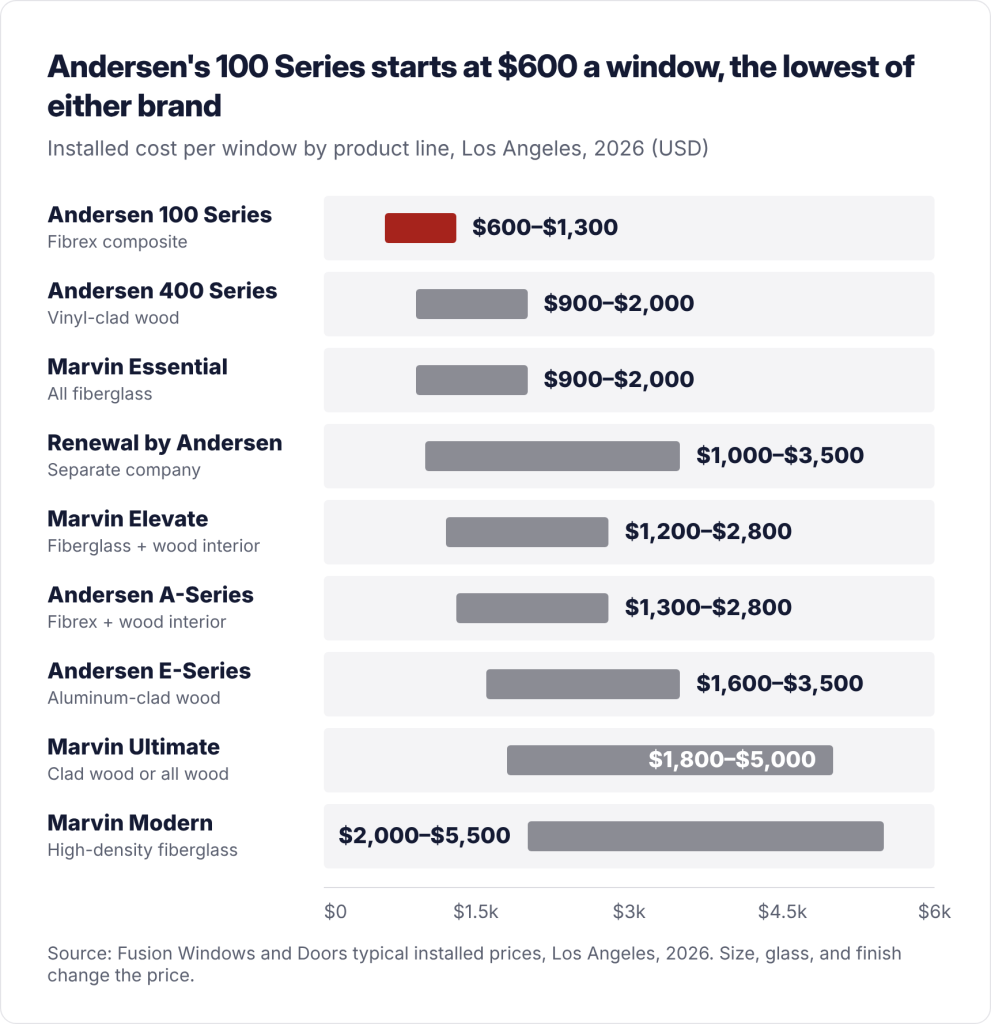
| Brand and Line | Min Cost (per window) | Max Cost (per window) |
| Andersen 100 Series | $600 | $1,300 |
| Andersen 400 Series | $900 | $2,000 |
| Andersen A-Series | $1,300 | $2,800 |
| Andersen E-Series | $1,600 | $3,500 |
| Renewal by Andersen | $1,000 | $3,500 |
| Marvin Essential | $900 | $2,000 |
| Marvin Elevate | $1,200 | $2,800 |
| Marvin Ultimate | $1,800 | $5,000 |
| Marvin Modern | $2,000 | $5,500 |
Cost by Window Style
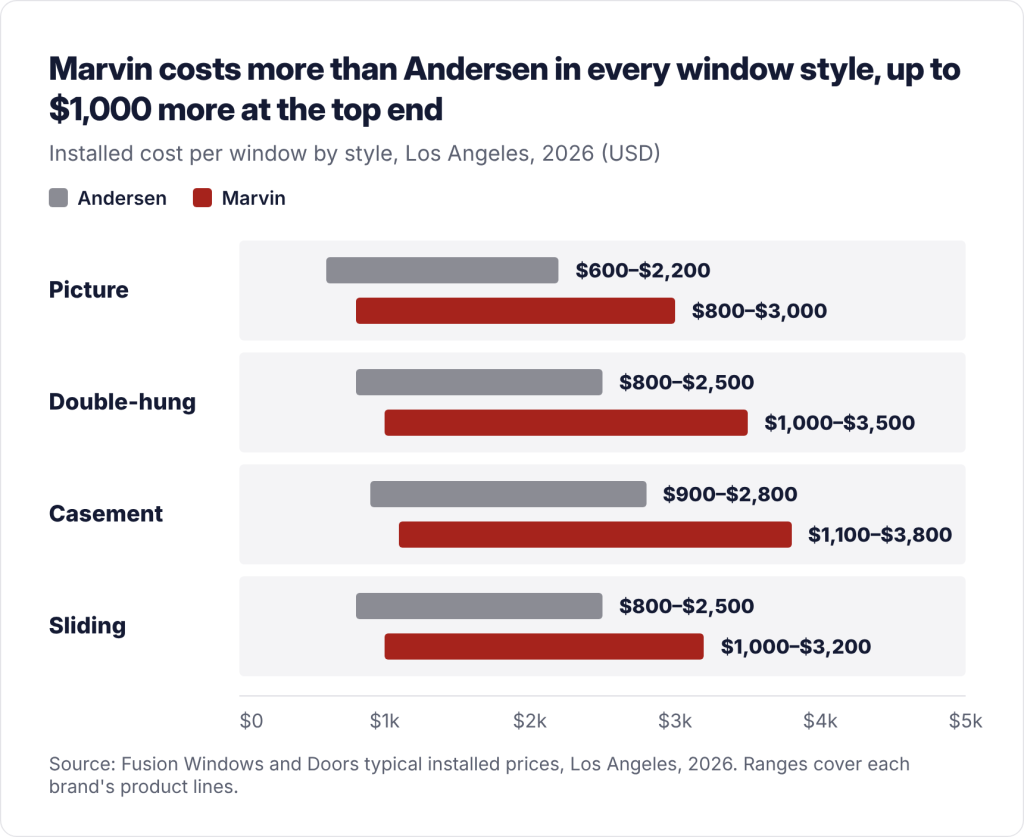
| Window Style | Andersen: Min | Andersen: Max | Marvin: Min | Marvin: Max |
| Picture | $600 | $2,200 | $800 | $3,000 |
| Double-hung | $800 | $2,500 | $1,000 | $3,500 |
| Casement | $900 | $2,800 | $1,100 | $3,800 |
| Sliding | $800 | $2,500 | $1,000 | $3,200 |
Hidden Costs to Plan For
| Hidden Cost | Min Cost | Max Cost | When It Applies |
| Stucco cut and patch | $300 | $900 per window | New construction installs on stucco homes |
| Interior trim replacement | $100 | $350 per window | Full-frame installs |
| Rot repair in the opening | $250 | $1,500 per window | When water damage is found |
| Permit | $150 | $600 | Most full-frame and new construction jobs |
| Custom size upcharge | $100 | $500 per window | Non-standard openings |
| Old window disposal | $25 | $75 per window | Most jobs (often included) |
Warranty
The two brands offer similar coverage on paper.
| Warranty Area | Marvin | Andersen |
| Glass | 20 years | 20 years |
| Non-glass parts | 10 years | 10 years |
| Fiberglass or frame | Longer coverage on some Ultrex parts | Covered under the 10-year parts warranty |
| Labor | Not included | Not included |
| Transferable | Yes | Yes, on most lines |
Neither brand covers labor in its standard warranty. That makes your installer’s workmanship warranty important. Ask about it before you sign.
Which Should You Choose?
Choose Marvin If:
- You want the strength and heat stability of pure fiberglass.
- You want slimmer frames and more glass.
- You have a historic or custom home that needs special sizes or shapes.
- You want a premium window that holds its seal for decades.
Choose Andersen If:
- You want more price options, including lower-cost lines.
- You want a wide range of exterior colors and interior wood finishes.
- You like the look of the 400 Series or the A-Series.
- You want a well-known brand with many product choices.
If you’re also considering Milgard, our Milgard vs. Andersen windows comparison covers that matchup. For a deeper look at Marvin on its own, read our Marvin windows review.
Get Help Comparing Marvin and Andersen
Fusion Windows and Doors is an authorized dealer and installer for both Marvin and Andersen. We’ve installed windows and doors in Los Angeles for more than 20 years. Get a free quote and we’ll compare both brands for your home and budget.
Get Directions to Our Burbank Showroom
See Marvin and Andersen windows side by side before you choose. Tap the button below to see the route from where you are.