

Upgrading your windows changes how your home feels, sounds, and performs. Many homeowners wonder if double-pane windows are worth the extra cost or if single-pane options still make sense for certain properties. You can compare both types clearly once you see the differences in insulation, comfort, noise, and long-term value on our windows services page.
The tables and sections below give you a simple way to understand both window types and decide what works best for your home.
Key Takeaways
- Single-pane windows cost less upfront but lose heat faster and offer weak noise control.
- Double-pane windows use two layers of glass and gas insulation to improve energy efficiency and comfort.
- Most U.S. homes benefit from double-pane upgrades because they lower energy use and keep indoor temperatures stable.
- Typical U.S. costs range from $150 to $400 installed for single pane and $450 to $1,250 for double pane.
- Energy savings from double-pane windows can reach $126 to $465 each year, depending on climate and home size.
Quick Comparison: Single vs Double Pane Windows
| Feature | Single-Pane Windows | Double-Pane Windows |
| Glass Layers | 1 | 2 |
| Insulating Gas | None | Argon or Krypton |
| Energy Efficiency | Low | Medium to High |
| Noise Reduction | Minimal | Strong improvement |
| U-Factor Range | 0.9 to 1.3 | 0.25 to 0.50 |
| Comfort | Drafty, temperature swings | Stable indoor temperature |
| Condensation | Common | Reduced |
| Typical U.S. Cost (Installed) | $150 to $400 | $450 to $1,250 |
| Best For | Budget limits, garages, sheds, mild climates | Most U.S. homes, energy savings and long-term use |
What Are Single-Pane Windows?
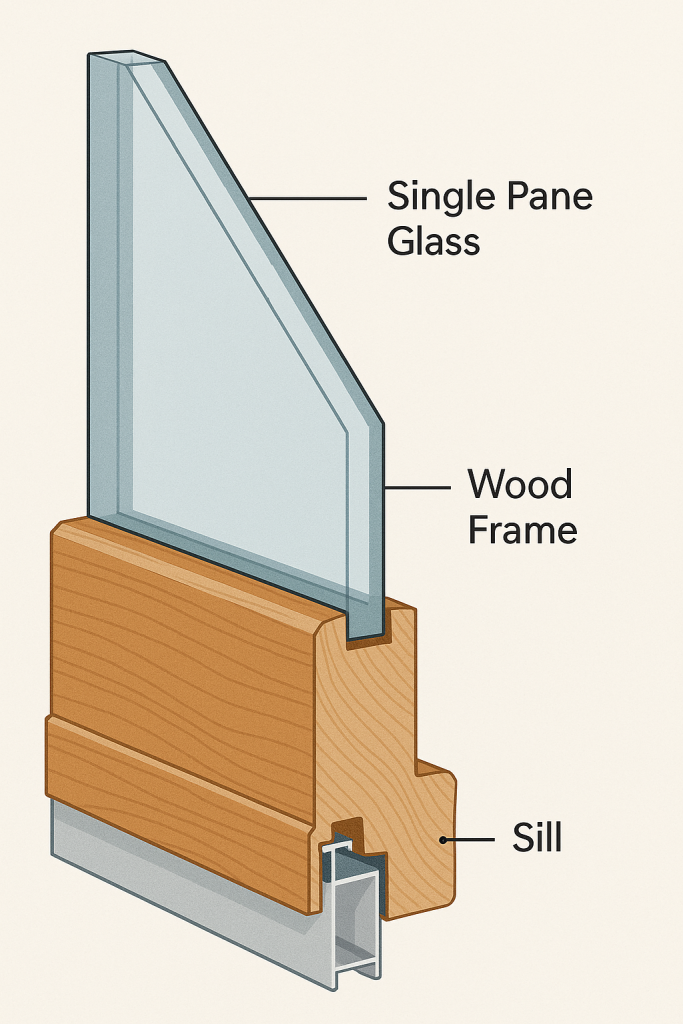
Single-pane windows use one layer of glass. There is no built-in insulation or gas layer to slow heat transfer. Many older American homes still have them, especially those built before the 1980s – check our guide on how long windows last for signs it’s time to replace.
You can find them in wood, aluminum, and vinyl frames. They look fine from the street, but the lack of insulation leads to drafts, uneven room temperatures, and higher heating and cooling use.
Pros and Cons of Single-Pane Windows
| Pros | Cons |
| Lowest upfront cost | Poor insulation |
| Simple repairs | Higher energy bills |
| Works for sheds or seasonal spaces | Weak noise reduction |
| Good for a historic look | More condensation |
Most homeowners in the U.S. pay $150 to $400 per window installed.
What Are Double-Pane Windows?
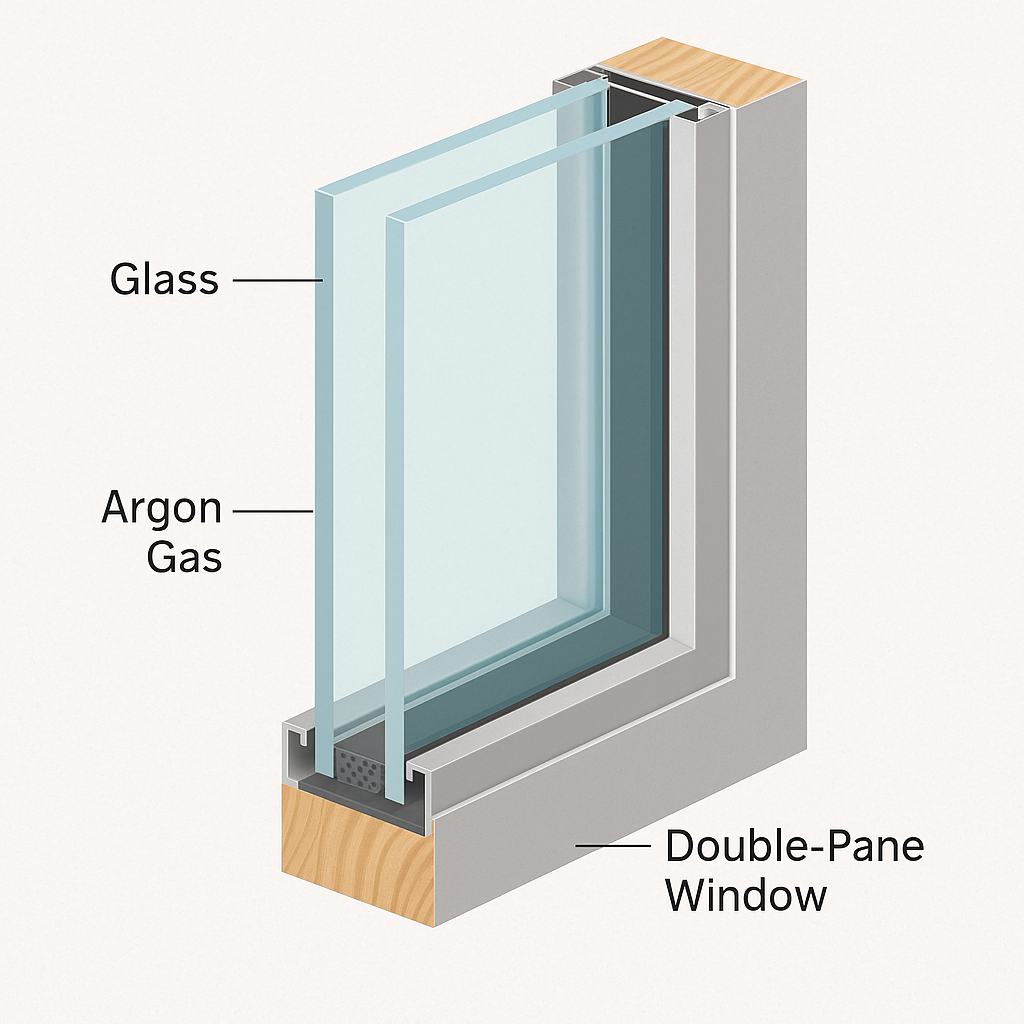
Double-pane windows use two layers of glass with a sealed layer of argon or krypton gas in between. This gas slows heat transfer and helps your home stay comfortable in both hot and cold weather.
Most modern windows also include a Low-E coating that reflects heat and reduces UV rays. This keeps furniture from fading and reduces solar heat gain.
Pros and Cons of Double-Pane Windows
| Pros | Cons |
| Much better insulation | Higher upfront cost |
| Strong noise reduction | Seal failure can occur over time |
| Lower energy bills | Heavier window units |
| Reduced condensation | Sometimes longer lead times |
Homeowners in the U.S. usually pay $450 to $1,250 per window installed, depending on size, frame type, and glass features.
Cost Comparison: Single vs Double Pane Windows in the United States
| Category | Single Pane | Double Pane |
| Material Cost | $80 to $250 | $250 to $800 |
| Installed Cost | $150 to $400 | $450 to $1,250 |
| Best Value | Low-budget or low-use rooms | Whole-home replacement |
| Payback Period | None | Three to seven years through energy savings |
Double-pane windows cost more, but they lower your energy use. The U.S. Department of Energy reports average savings of $126 to $465 each year when you replace single-pane windows with quality double-pane units.
Energy Efficiency Comparison
Energy performance depends on two values:
- U-Factor: Lower numbers mean better insulation.
- Solar Heat Gain: Lower numbers reduce heat entry from sunlight.
Energy Performance Table
| Performance Area | Single Pane | Double Pane |
| U-Factor | 0.9 to 1.3 | 0.25 to 0.50 |
| Solar Heat Control | Low | Medium to High (with Low-E) |
| UV Blocking | Low | Medium to High |
| Annual Energy Savings | None | $126 to $465 per year |
Noise Reduction Comparison
Noise control matters if you live near traffic, schools, airports, or busy streets. Double-pane windows create a physical and acoustic barrier that single-pane windows simply cannot match.
| Category | Single Pane | Double Pane |
| STC Rating | 26 to 28 | 28 to 34 |
| Outdoor Noise Reduction | Minimal | Moderate to strong |
| Indoor Echo Control | Low | Good |
| Best For | Quiet rural areas | Most U.S. neighborhoods |
If you hear cars, voices, or barking dogs through your current windows, double-pane glass will make a noticeable difference.
Comfort Differences
Temperature Stability
Single-pane windows allow outdoor temperatures to quickly affect indoor rooms. Cold air leaks in during the winter, and heat builds faster during the summer. Double-pane windows slow this transfer so your rooms stay far more comfortable.
Condensation
Moisture forms easily on single-pane windows, especially in cold climates. Double-pane windows reduce condensation due to the insulating layer between the panes.
Maintenance and Durability
Double-pane windows require less hands-on management. You get fewer drafts, fewer moisture problems, and far better performance throughout the year.
| Area | Single Pane | Double Pane |
| Seal Failure | None | Possible over time |
| Replacement Cost | Lower | Higher |
| Lifespan | 20 to 40 years | 20 to 30 years |
| Frame Compatibility | Works with most frames | Works with most frames |
Which Windows Should You Choose?
You can decide quickly by looking at your climate, budget, and long-term plans.
Choose Single-Pane Windows If:
- You only need windows for a shed, garage, or seasonal space.
- You have a strict budget.
- You live in an area with mild temperatures.
Choose Double-Pane Windows If:
- You want lower energy bills.
- You want quieter rooms.
- Your home has uneven temperatures.
- You live in a cold or hot region.
- You plan to stay in your home long term.
Most U.S. homeowners choose double-pane windows because the comfort and savings outweigh the initial cost.
Need Professional Installation for Better Results?
New windows work best when they are installed correctly. Proper installation keeps the insulating gas sealed, maintains the Low-E performance, and prevents air leaks around the frame. Fusion Windows & Doors offers high-quality double-pane units, expert installation, and guidance that matches your climate and home design.
If you want better comfort, lower energy use, and a quieter home, you can get a free quote with Fusion and explore the options that fit your property.
FAQs
Should I replace single-pane windows with double-pane?
Yes, for most homes. Replacement is recommended if you want lower energy bills, better temperature control, less noise, and modern performance. For mild climates, sheds, or tight budgets, single-pane may still work, but double-pane offers long-term savings and comfort.
How long do double-pane windows last?
With proper installation, most last 20 to 30 years. Their lifespan depends heavily on the seal’s integrity; if it fails, fogging can occur between the panes.
Do double-pane windows stop street noise?
They reduce it significantly. The dual glass layers and insulated gap create a strong sound barrier for everyday noise like traffic, though very loud sounds may still be heard.
Can I insulate single-pane windows instead of replacing them?
You can use temporary measures like window film or weatherstripping to improve performance. However, these cannot match the permanent insulation and comfort of a true double-pane window.
Do double-pane windows prevent condensation?
They greatly reduce it. The insulated glass keeps the inner pane closer to room temperature, minimizing the cold surface where condensation forms, though it can still happen at the edges.
What gas is used between double-pane windows?
Most use argon gas for better insulation. Premium windows sometimes use krypton, which is denser and offers higher performance, especially in slimmer window frames.