
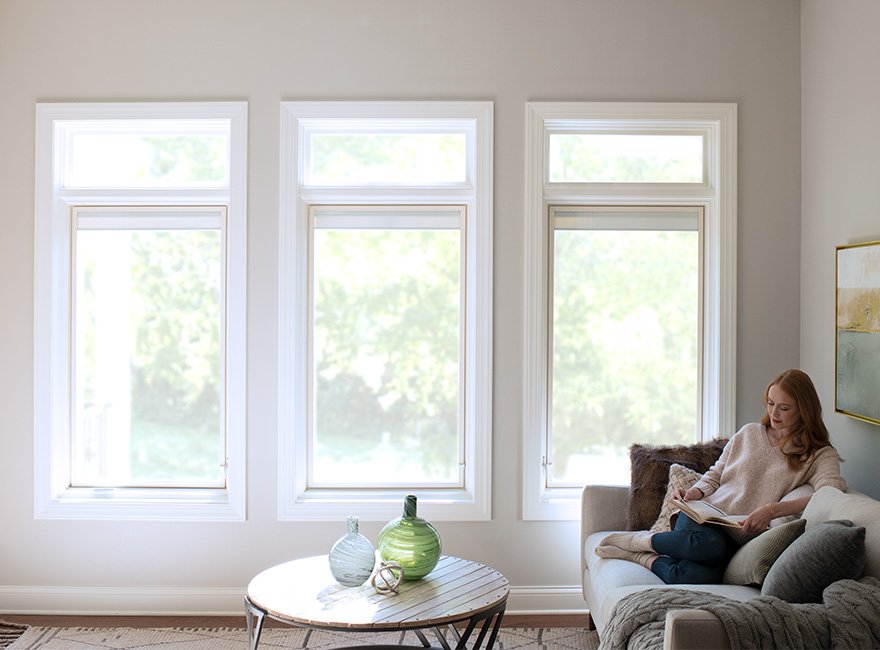
Choosing the best energy efficient windows for hot climates comes down to three things: the right performance ratings, the right frame material, and glass that actually blocks heat rather than trapping it. In Southern California, there’s a fourth factor most guides skip entirely. California’s Title 24 energy code sets legally required performance minimums for any permitted window installation. This guide covers all of it: what ratings to look for, which materials perform best in LA’s specific climate zones, which brands meet the standard, and which window styles seal most effectively against heat.
What Makes a Window Energy Efficient in a Hot Climate
Two numbers on the NFRC label determine how a window performs in heat. Every window sold in California is required to carry this label. Here’s what each rating means.
Solar Heat Gain Coefficient (SHGC) measures how much of the sun’s heat passes through the glass. The scale runs from 0 to 1. A lower number means less heat enters your home. In Southern California’s hot inland and coastal zones, you want an SHGC of 0.23 or lower. That’s also the maximum California Title 24 allows in most climate zones.
U-Factor measures how well the window resists heat flow through the entire assembly — glass, frame, and spacers combined. Again, lower is better. California Title 24 requires a U-factor of 0.30 or lower for most residential installations.
Visible Transmittance (VT) measures how much natural light comes through. This one doesn’t affect heat directly, but it matters because some low-SHGC glass options reduce light along with heat. You want a VT high enough that your rooms don’t feel dark after the upgrade.
The practical takeaway: when you’re comparing windows, SHGC is the number that matters most in a hot climate. U-factor matters more in cold climates where heat retention is the goal. In Los Angeles, prioritize SHGC first.
The Best Window Frame Materials for Hot Climates
Frame material affects both thermal performance and long-term durability in Southern California’s conditions. Here’s how the main options compare.
Thermally Broken Aluminum
Thermally broken aluminum is the top choice for luxury homes and coastal properties in Los Angeles. Standard aluminum conducts heat readily, which works against you in hot climates. A thermally broken frame solves this by inserting a non-conductive barrier between the interior and exterior sections of the frame, stopping heat from transferring through the metal.
Beyond thermal performance, aluminum handles Southern California’s coastal environment better than wood or standard vinyl. Salt air, UV exposure, and temperature swings don’t warp or degrade it. Brands like Fleetwood and Milgard build thermally broken aluminum systems that meet Title 24 requirements while delivering the slim sightlines and large-format glass that modern LA architecture demands.
Vinyl
Vinyl is the most practical choice for inland homes where budget matters and the aesthetic priority is performance over design. The hollow chambers inside vinyl frames act as natural insulators, reducing heat transfer without any additional engineering. Vinyl doesn’t conduct heat the way aluminum does, it won’t rot, and it requires almost no maintenance.
For homes in hotter inland areas like Pasadena, Altadena, or the Santa Clarita Valley where summer temperatures regularly exceed 95°F, vinyl with a quality Low-E glass package delivers strong energy performance at a lower price point than aluminum or fiberglass.
Fiberglass
Fiberglass sits between aluminum and vinyl in terms of cost, and above both in pure thermal performance. It expands and contracts at nearly the same rate as glass, which means seals stay tight over decades of temperature cycling. That’s a real advantage in Southern California where daytime to overnight temperature swings can exceed 30 degrees.
Fiberglass is a strong choice for homeowners who want long-term performance without the maintenance wood requires or the design limitations of vinyl. Marvin and Andersen both offer fiberglass options through Fusion Windows and Doors that meet or exceed Title 24 requirements.
Glass Options That Reduce Heat in Southern California Homes
The frame holds the glass, but the glass does the actual work of blocking heat. These are the options that move the needle on SHGC.
Low-E glass is the baseline requirement for any energy efficient window in a hot climate. Low-Emissivity coatings are microscopically thin metal oxide layers applied to the glass surface that reflect infrared heat while letting visible light through. Without a Low-E coating, no dual-pane window will reach an SHGC of 0.23. With the right Low-E coating, many will.
Dual-pane vs. triple-pane is a question that comes up on almost every project. In Southern California, dual-pane with a high-performance Low-E coating outperforms triple-pane with a basic coating in most cases. The coating does the heavy lifting on solar heat rejection. A third pane adds weight and cost without a proportional improvement in SHGC. Save the triple-pane budget for the glass coating upgrade instead.
Argon gas fill between panes improves the U-factor by slowing convective heat transfer through the air gap. It’s a standard feature on most quality dual-pane windows and worth confirming is included. Krypton gas performs better than argon but costs more — it’s worth specifying on smaller, high-performance windows where the price difference is minimal.
Tinted or spectrally selective glass can push SHGC below 0.20 for applications where maximum solar rejection is the priority. This is common on west-facing windows in inland homes that take the full force of afternoon sun. Some spectrally selective options maintain a high VT while still achieving low SHGC, meaning you keep the light without the heat.
California Title 24: What It Requires and Why It Matters
Title 24 is California’s building energy efficiency standard. It applies to new construction and to replacement windows on permitted projects. If you pull a permit for your window installation — which any reputable contractor will require on structural work or new openings — your windows must comply.
For most Southern California climate zones, the requirements are:
- Maximum SHGC: 0.23
- Maximum U-factor: 0.30
- Dual-glazed with Low-E coating required on new installations
The California Energy Commission’s Title 24 standards are the strictest residential energy codes in the United States. That’s not a burden — it’s a useful filter. Any window that meets Title 24 in a hot California climate zone is a genuinely energy efficient product. Any window that doesn’t meet it shouldn’t be on your list.
One exception worth knowing: replacement windows covering less than 75 square feet total may qualify for a slightly relaxed standard of SHGC 0.35 and U-factor 0.40. Your installer will confirm which threshold applies to your project.
Southern California’s Different Climate Zones and What Each Needs
Los Angeles County alone spans multiple Title 24 climate zones with meaningfully different conditions. A one-size-fits-all recommendation doesn’t serve every homeowner equally.
Coastal zones (Malibu, Pacific Palisades, Santa Monica, Manhattan Beach) deal with a marine layer that moderates temperature but brings salt air and humidity. The primary concern here isn’t peak heat, it’s frame corrosion and long-term seal integrity. Thermally broken aluminum with a quality powder-coat finish handles coastal conditions better than wood or standard vinyl. SHGC still matters, but coastal properties often get more benefit from a tight U-factor and durable frame than from chasing the lowest SHGC number.
Inland valleys (Pasadena, Altadena, Burbank, Glendale, Santa Clarita) face the hardest solar load in the region. West-facing windows in these areas take full afternoon sun with no marine layer to moderate it. This is where SHGC 0.23 or lower matters most. A window that blocks solar heat effectively in Pasadena can reduce cooling loads enough to make a measurable difference on an electricity bill through a long summer.
High desert and mountain fringe areas (Topanga, parts of Ventura County) need windows that perform in both directions, blocking heat in summer and retaining it on cold winter nights. Here, U-factor and SHGC are equally important. Thermally broken frames with dual-pane Low-E glass rated well on both metrics are the right specification.
The Best Window Brands for Hot Climates in Los Angeles
Generic buying guides talk about frame materials and ratings in the abstract. Here are the specific brands that deliver on those specs and are available through authorized dealers in Los Angeles.
Milgard
Milgard is the most widely specified window brand for Title 24 compliance in California. Their Tuscany and Trinsic series in vinyl, and the aluminum thermally broken options in the aluminum line, are engineered specifically for California’s climate zones. Milgard publishes NFRC ratings for every product, making compliance verification straightforward for permitted projects. For homeowners who need a clear Title 24-compliant solution without the premium of luxury brands, Milgard is the starting point.
Fleetwood
Fleetwood builds exclusively in aluminum with thermally broken profiles across their Gen4 and EDGE collections. Their products are engineered for large-format openings — the kind of floor-to-ceiling glass walls and multi-slide door systems that define modern Los Angeles architecture. The Gen4 collection is specifically designed for coastal and high-performance environments, with NFRC certifications that meet Title 24. For hillside homes in Malibu or architectural builds in Beverly Hills where design and compliance both matter, Fleetwood is the premium specification.
Andersen and Marvin
Both Andersen and Marvin offer fiberglass and composite frame options with strong thermal performance and extensive customization. Andersen’s 100 Series and A-Series products hit Title 24 numbers across most California climate zones. Marvin’s Elevate line uses a fiberglass exterior with wood interior — a combination that performs well thermally while giving architects design flexibility. These brands work particularly well on homes where a mix of materials is appropriate, such as Pasadena craftsman restorations or Spanish revival properties in the inland valleys where a purely aluminum aesthetic doesn’t fit.
Window Styles That Seal Most Effectively in Hot Climates
Frame material and glass ratings matter, but the window style determines how well the unit seals against air infiltration. Air leakage brings heat into your home independently of the glass’s solar performance.
Casement windows are the tightest-sealing operable style available. When closed, the sash presses against the frame around the entire perimeter, compressing the weatherstrip on all four sides. That compression seal outperforms double-hung windows significantly in air tightness. For hot climates where keeping conditioned air in is as important as blocking solar heat, casement is the preferred operable style.
Picture and fixed windows have no moving parts and therefore no air leakage path through the frame. For openings where ventilation isn’t needed, a fixed window delivers the cleanest thermal performance of any style. They’re a common choice on west-facing walls in inland homes where the goal is maximum heat rejection with maximum light.
Double-hung windows are the most common style and the least airtight. The sliding sash mechanism creates a permanent gap path that even good weatherstripping can’t fully eliminate. In a hot climate, they’re a functional compromise — acceptable for bedrooms and secondary rooms, but not the first choice for primary exposures.
Sliding windows sit between casement and double-hung in terms of seal quality. They seal better than double-hung on the meeting rail but still have a sliding track that limits full perimeter compression. A good option for openings where a casement’s outward swing is impractical.
Frequently Asked Questions
What SHGC Rating Do I Need for a Los Angeles Home?
For most permitted projects in Los Angeles, Title 24 requires an SHGC of 0.23 or lower. Coastal zones may have slightly different requirements depending on the specific climate zone your address falls under. The California Energy Commission’s climate zone lookup tool lets you confirm your zone by address before you specify anything.
Is Triple-Pane Glass Worth It in Southern California?
For most LA locations, no. A high-performance dual-pane window with a triple-silver Low-E coating will outperform a basic triple-pane unit on SHGC — which is the number that matters most in a hot climate. Triple-pane adds weight and cost with diminishing returns on solar heat rejection. The exception is high desert and mountain properties where winter heat retention is as important as summer cooling.
How Do I Read an NFRC Label on a Window?
The NFRC label appears as a sticker on every window sold in California. It lists U-factor, SHGC, VT, and air leakage in that order. For hot climates, focus on SHGC first. If it’s above 0.23, the window won’t comply with Title 24 in most Los Angeles climate zones. U-factor should be 0.30 or lower. Everything else on the label is secondary for a hot climate application.
Do All Replacement Windows Need to Meet Title 24?
Any replacement window installed under a permit must meet Title 24. The exception is small replacement projects totaling less than 75 square feet, which may qualify for a relaxed standard. If you’re replacing a single window without pulling a permit, the code technically doesn’t apply — but a window that meets Title 24 is still a better product that will perform better and cost less to operate. An authorized installer will advise you on what your specific project requires.
Which Frame Material Holds Up Best Near the LA Coast?
Thermally broken aluminum is the strongest choice for coastal properties. It doesn’t corrode, warp, or degrade under salt air and UV exposure the way wood does. Quality powder-coat finishes on aluminum frames are tested for coastal durability and carry manufacturer warranties that cover finish adhesion. Vinyl is a reasonable second option for coastal use, but aluminum outperforms it on longevity in direct ocean-facing exposures.
At Fusion Windows and Doors, we carry Milgard, Fleetwood, Andersen, Marvin, and other brands that meet California Title 24 requirements across all Los Angeles climate zones. Every product we install comes with transparent pricing, professional measurements, and a full workmanship warranty. If you’re ready to upgrade to windows that actually perform in Southern California heat, request a free quote and we’ll walk you through the right specification for your home.