
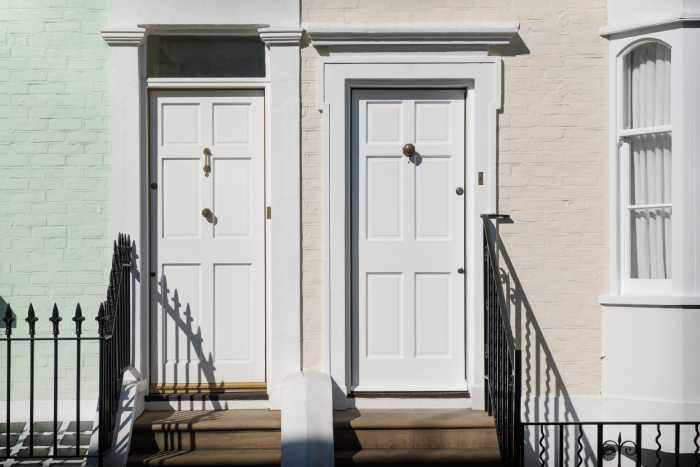
There’s no single “best door.” A front entry door and a closet door are solving completely different problems. The entry door needs to survive weather, deter break-ins, and make a first impression. A closet door just needs to open and close smoothly without eating up floor space. Selecting the best doors for your home means matching each opening to its actual job, then choosing material, style, and brand around that job rather than the other way around.
This guide walks through that process room by room: entry, patio, interior, and closet, with the material, budget, and style factors that matter most for Los Angeles homes, and links to our deeper guides on each topic along the way.
Start With the Door’s Job, Not the Style
Before comparing materials or browsing styles, it helps to sort your project into one of four categories, since the priorities are different for each:
- Entry/front doors: security, weather sealing, and curb appeal come first. This is the door that has to do the most work.
- Patio and sliding doors: the priority is the indoor-outdoor connection, natural light, sightlines, and how much of the opening actually moves.
- Interior doors: privacy, sound control, and how the door fits the flow of the room matter more than weather resistance.
- Closet and utility doors: space efficiency is the deciding factor, since these openings are often narrower or need to avoid swinging into a walkway.
Once you know which category you’re solving for, the material and style choices get a lot easier.
Choosing the Best Front Entry Door
Your front door gets more daily wear, more weather exposure, and more scrutiny than any other door in the house. Three things drive the decision:
Material. Steel doors are the most affordable and offer strong security, but they can dent and are less design-flexible. Fiberglass doors are the most popular mid-range choice: they resist warping, handle Southern California sun without fading as quickly as some finishes, and can be finished to mimic wood grain. Solid wood doors offer the richest look and are common on Craftsman and Spanish Colonial homes, but need more upkeep in a sun-heavy climate. Iron and steel-and-glass combinations are increasingly popular for a more architectural, high-security look.
Style, matched to your home’s architecture. A door that looks great on a mid-century modern home in Los Feliz can look out of place on a Spanish Colonial in Pasadena. Rather than duplicate that whole discussion here, our front door styles guide covers every major style, modern, traditional, Craftsman, Spanish arched, and which Los Angeles neighborhoods and architecture each one suits best.
Security and glass placement. Multi-point locking hardware, solid-core construction, and reinforced frames matter more on an entry door than almost anywhere else in the house. If you’re including glass, sidelights, or a transom, consider how much visibility into the entryway you actually want.
Before ordering, it’s worth confirming your opening against standard sizing. Our standard door sizes guide breaks down typical widths, heights, and thicknesses for entry, French, and closet doors so you know what to expect before your consultation.
Choosing the Best Patio Door
For the indoor-outdoor connection, the two main contenders are French doors and sliding doors, with multi-slide and bifold systems as a third option for larger openings.
French doors bring a formal, traditional look and suit Spanish Colonial Revival and Mediterranean homes especially well. Sliding doors have a cleaner, more minimal profile that fits mid-century and contemporary builds. Both can perform similarly on energy efficiency once you account for glass package: Low-E coating, dual or triple-pane construction, and argon fill matter more than the door type itself.
For openings wider than a standard patio slider, multi-slide and pivot door systems (available through brands like Fleetwood and LaCantina) can open an entire wall to the backyard, a popular choice for LA homes built around outdoor living.
We’ve written a full breakdown of the French-vs-sliding decision, including which fits which architectural style, in our French doors vs. sliding doors guide.
Choosing the Best Interior Doors
Interior doors don’t face weather, so the calculus shifts toward privacy, sound, material feel, and space.
- Hollow-core doors are the most budget-friendly and work fine for closets or low-traffic rooms, but offer little sound dampening.
- Solid-core doors cost more but noticeably reduce noise transfer, worth it for bedrooms, home offices, and bathrooms.
- Pocket doors slide into the wall and are a strong choice for tight floor plans where a swinging door would eat up usable space.
- Bifold doors are the standard for closets and pantries, folding flat against the opening rather than swinging into the room.
- Barn doors have become a popular design statement for larger openings, though they need enough adjacent wall space to slide across.
Our interior doors page covers the full range of styles and finishes we carry, and if you’re specifying a closet or pantry bifold, our bifold door sizes guide walks through nominal vs. actual dimensions so your rough opening is measured correctly the first time.
Matching Material to Your Budget
Rather than repeat exact pricing here, it’s worth knowing the general tiers before you start comparing quotes:
| Tier | Materials | General Fit |
|---|---|---|
| Budget-friendly | Steel, aluminum, composite | Strong security-to-cost ratio; fewer finish options |
| Mid-range | Fiberglass | Low maintenance, good energy performance, wood-look finishes available |
| Premium | Solid wood, iron, clad-wood | Best aesthetics and architectural detail; more upkeep or higher material cost |
Framing and structural work, oversized or custom dimensions, and hardware upgrades all move the total up from there. For exact current ranges by door type, material, and installation scope, see our full door installation cost guide.
Energy Efficiency for Los Angeles Homes
California’s Title 24 energy code applies to doors with glass just as it does to windows. When comparing options, look for:
- Low-E glass coatings on any door with sidelights, a transom, or a full-glass panel
- Insulated cores (foam-filled steel or fiberglass) rather than hollow construction
- Quality weatherstripping and sweeps, which matter as much as the door material itself for keeping conditioned air in
- ENERGY STAR certification, a quick way to confirm a product meets baseline performance standards
Getting this right doesn’t just affect comfort. It affects your monthly utility bill and, for full remodels, your Title 24 compliance documentation.
Security-Focused and Specialty Doors
For homeowners prioritizing security without sacrificing style, steel and iron doors have become a popular alternative to standard fiberglass entries, particularly for street-facing entries or homes in areas where security is a top concern. If you’re comparing steel options against lower-cost alternatives, our guide on Euroline steel doors vs. cheap alternatives covers what separates a genuinely secure, well-built steel door from a budget import that looks similar in photos.
Working With the Right Installer
Even the best door underperforms with a poor installation: gaps, uneven reveals, and improper flashing lead to drafts, water intrusion, and early hardware wear. When vetting a contractor:
- Confirm they’re licensed and insured for work in your city
- Ask whether installation is done in-house or subcontracted
- Get an itemized quote that separates the door, hardware, labor, and any structural or framing work
- Check recent local reviews and completed projects
If you want a broader comparison of local options before choosing, we’ve put together an independent-style rundown of the best door companies in Los Angeles worth reviewing.
Frequently Asked Questions
What’s the best material for a front door in Los Angeles?
Fiberglass is the most popular choice for LA homeowners because it resists warping and fading in strong sun while needing very little maintenance. Steel is a strong budget option for security, and solid wood remains popular on Craftsman and Spanish-style homes willing to take on more upkeep.
Should my interior doors match my front door style?
They don’t need to match exactly, but consistency in tone (modern vs. traditional) and hardware finish throughout the home tends to look more intentional than mixing sharply different styles room to room.
Is it worth upgrading to solid-core interior doors?
For bedrooms, home offices, or any room where sound privacy matters, yes. The difference in noise transfer between hollow-core and solid-core doors is noticeable.
Do sliding or French doors perform better for energy efficiency?
Both can perform well. The glass package (Low-E coating, pane count, gas fill) has a bigger impact on efficiency than whether the door slides or swings.
How do I know what size door I need?
Standard entry doors are typically 80 inches tall and 36 inches wide, with variations by manufacturer and door type. Our standard door sizes guide has the full breakdown, but a precise in-home measurement is the only way to be certain before ordering.
Get Help Choosing the Right Doors for Your Home
Selecting the best doors for your home ultimately comes down to matching material, style, and performance to what each opening needs to do, and having someone who installs these products daily walk you through the trade-offs. As Fusion Windows and Doors in Los Angeles, we’re an authorized dealer for Andersen, Marvin, Fleetwood, LaCantina, TruStile, and T.M. Cobb, and our licensed, in-house installation team handles everything from a single front door swap to a full-home door package.
Ready to talk through your options? Request a free in-home estimate or call (818) 245-8484.