Fusion Windows and Doors Logo

French Doors vs. Sliding Doors: Which One Is Right for Your Los Angeles Home?

french doors
french doors

French doors and sliding doors are the two most popular patio door choices for Los Angeles homes. Both connect indoor living spaces to outdoor areas, let in natural light, and come in a wide range of materials and finishes. The right choice depends on your floor plan, home style, budget, and how you use the space. This guide covers every factor so you can make a confident decision.

At Fusion Windows and Doors, we install both door types across Los Angeles and surrounding communities. Here’s an honest comparison of what each delivers.

French Doors vs. Sliding Doors at a Glance

Factor French Doors Sliding Doors
Opening mechanism Hinged, swing in or out Track-based, glide left or right
Space required Needs swing clearance Minimal floor space
Max opening width Typically up to 8 feet Up to 16 feet or more
Glass area Divided panes Large uninterrupted panels
Aesthetic Classic, traditional Modern, contemporary
Energy efficiency Good with proper sealing Good to excellent
Security Strong with multi-point locks Strong with modern locking systems
Maintenance Hinges and weatherstripping Tracks and rollers
Cost range installed $2,000 to $5,000 $1,500 to $6,000+
Best for Traditional homes, wide openings, formal spaces Contemporary homes, tight spaces, large views

How French Doors and Sliding Doors Actually Work

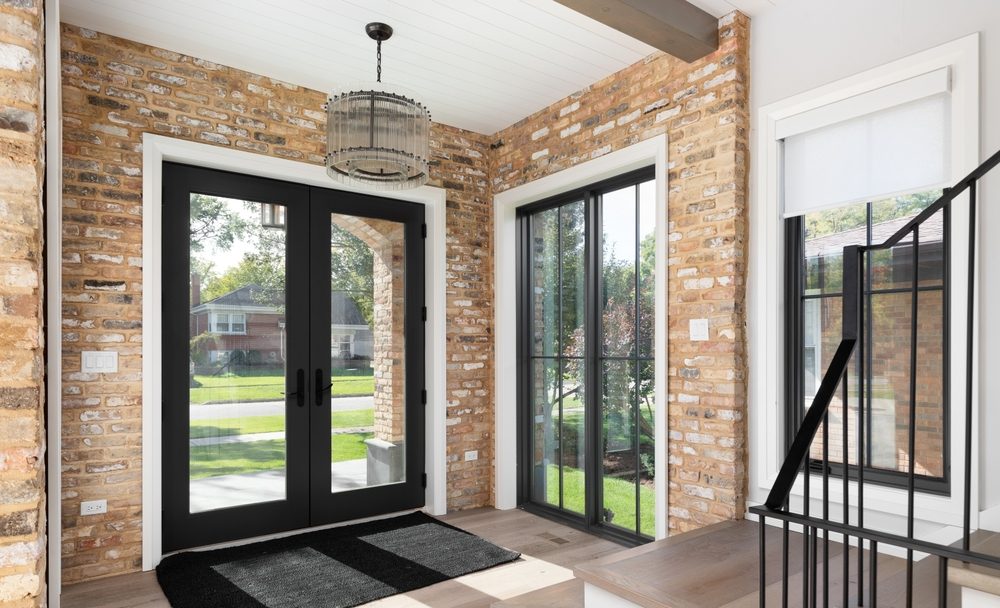
French doors are hinged at the sides and swing open from the center. They typically come as a pair of panels, each attached to opposite sides of the frame. Both panels can open fully, which creates a wide unobstructed passageway between indoor and outdoor spaces.

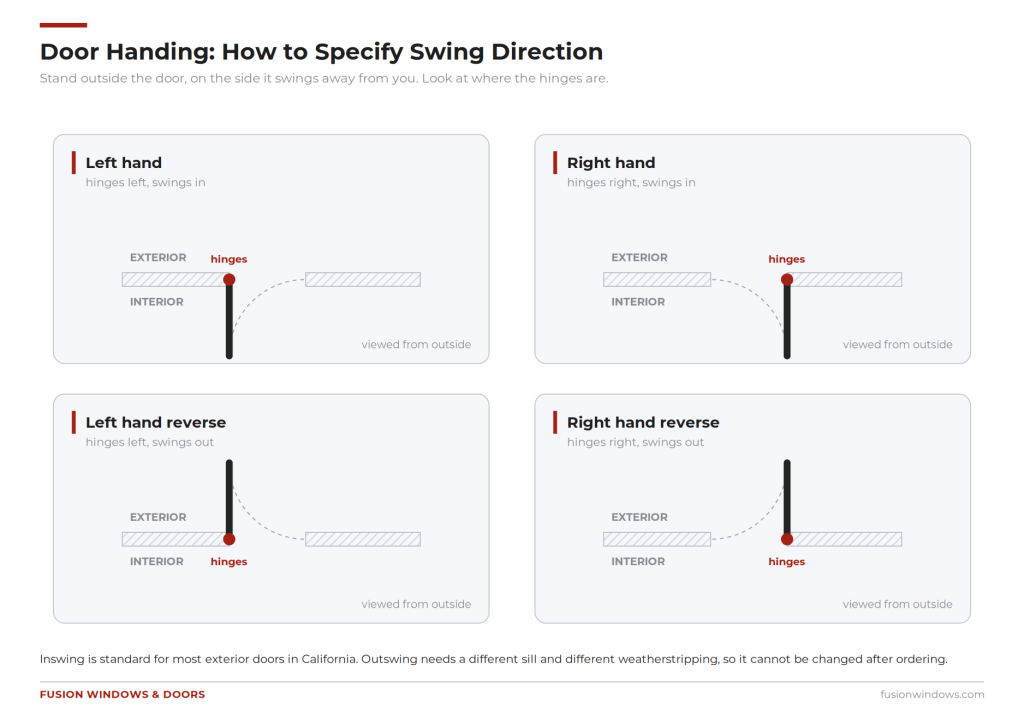
They swing either inward into the room or outward onto the patio. The direction matters for floor plan planning, since one side will always require clearance when the doors are open.

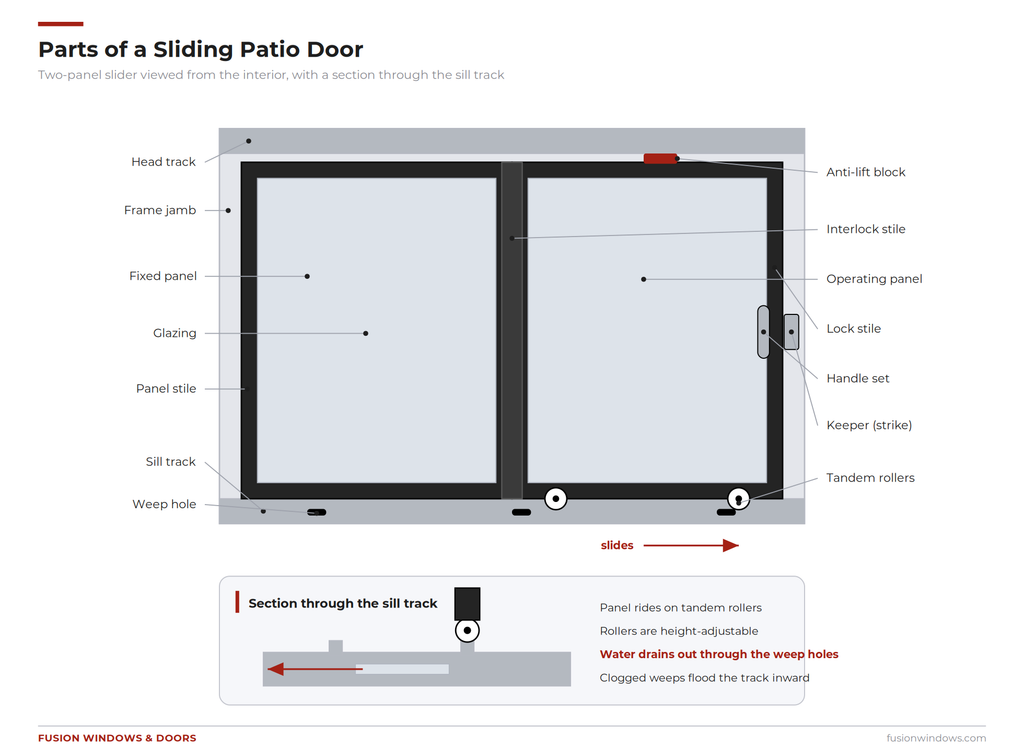
Sliding doors use one or more panels that glide horizontally along a track. One panel is usually fixed while the other moves. Multi-panel systems can include two, three, four, or more panels, with some spanning openings of 16 feet or wider.

Because the panels move parallel to the wall, sliding doors need no floor clearance on either side. That’s their core space advantage over French doors.

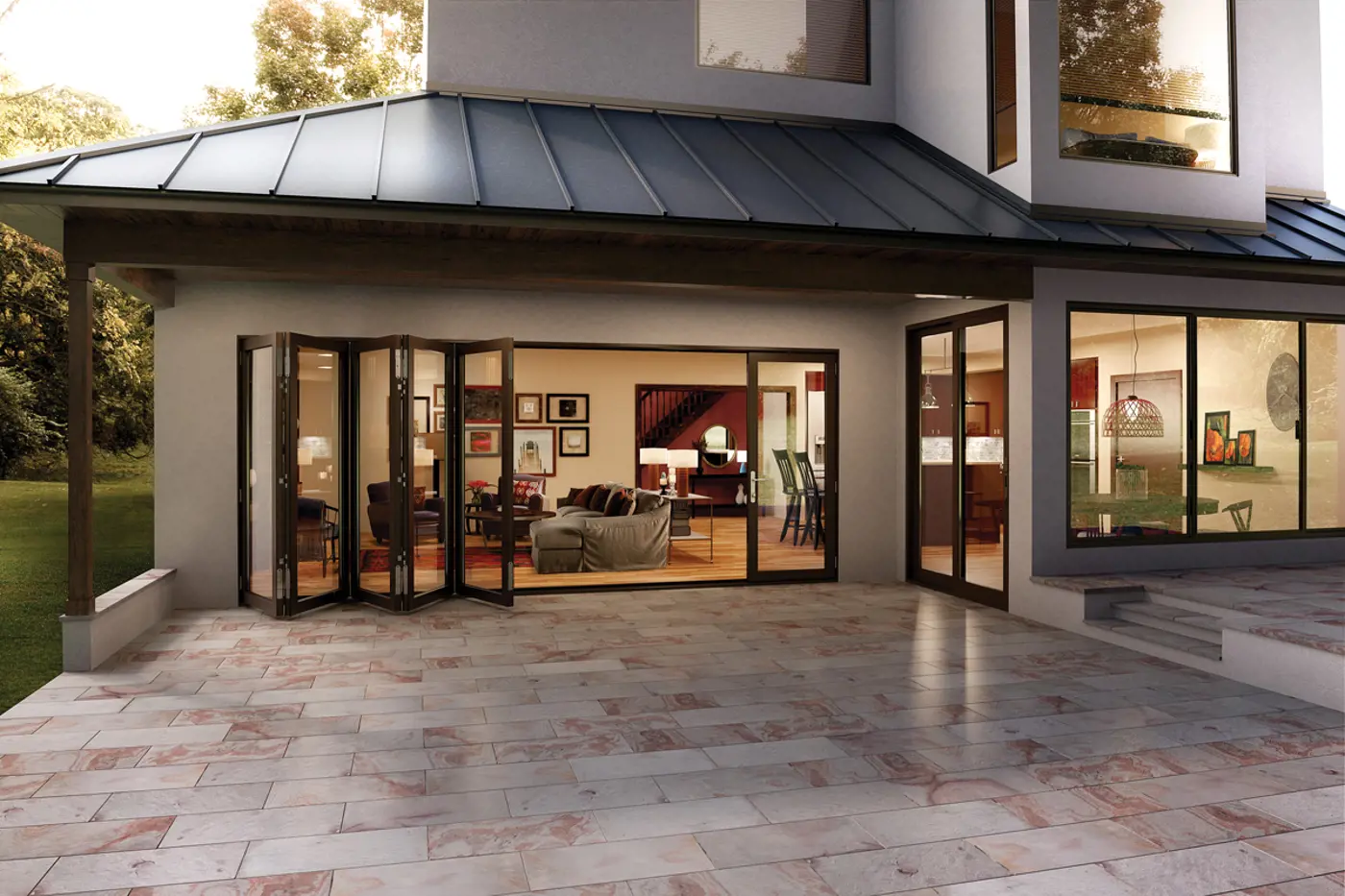
Sliding French doors are a third option worth knowing about. They combine the divided lite glass design of traditional French doors with the track-based operation of sliding doors. They’re a practical choice for homeowners who want the classic French door look but don’t have the swing clearance. Panel counts run from two to four, and widths can reach 16 feet.

How Each Door Type Handles Space and Floor Plan Constraints

French doors need swing clearance. A standard pair requires roughly 3 to 4 feet of clear floor space on whichever side they open toward. That limits furniture placement near the opening and can be a real problem on smaller patios or in compact rooms.

Sliding doors solve this completely. The panels move along the wall and don’t encroach on floor space in either direction. For LA homes with narrow side yards, compact patios, or open-plan layouts where furniture sits close to the door, sliding doors are the more practical choice.

One consideration for sliding doors is the fixed panel. When a sliding door is open, roughly half the total width is blocked by the stationary glass. French doors open fully across their entire width, which gives better physical access between spaces when both panels are swung open.

For door installation in tight spaces or where maximizing usable floor area matters, sliding doors almost always work better. For homes with generous patio space and formal entertaining areas, French doors create a wider, more dramatic passageway.

Natural Light and Outdoor Views: How Each Door Performs

Sliding doors typically offer better unobstructed views. Their large single-pane glass panels create a picture-frame effect that frames the garden or patio with minimal visual interruption. When the door is closed, the view is nearly the same as when it’s open.

French doors use divided glass panes separated by muntins, which are the horizontal and vertical bars that create the classic multi-pane grid pattern. This adds character and suits traditional architecture, but the muntins do interrupt sightlines compared to a large sliding panel.

For Southern California homes positioned to take advantage of canyon views, ocean outlooks, or pool areas, sliding doors maximize the connection between indoors and outdoors. For homes where the aesthetic character of the door itself is the priority over the view beyond it, French doors deliver more visual interest in the door frame.

Both door types bring substantial natural light into the room. The difference in light volume between them is minimal. What differs is the quality of the view and the visual character of the opening.

Which Door Style Suits Your Home’s Architecture

This is the factor most guides skip entirely. In Los Angeles, home architecture varies dramatically by neighborhood, and the right door choice follows from the home’s style.

LA Home Style Neighborhoods Recommended Door
Spanish Colonial Revival Hancock Park, Beverly Grove, Windsor Square French doors with arched transoms, dark iron hardware
Craftsman Bungalow Pasadena, Highland Park, South Pasadena French doors with divided lite glass, wood or fiberglass
Mid-Century Modern Los Feliz, Hollywood Hills, Encino Slim-profile sliding doors, minimal frame
Contemporary / New Build Malibu, Pacific Palisades, Bel Air Large-format sliding or pocket systems
Ranch Style San Fernando Valley, Culver City, Mar Vista Either; sliding doors suit open-plan layouts
Mediterranean Revival Manhattan Beach, Redondo Beach French doors or wide sliding systems
Victorian Angelino Heights, Carroll Avenue French doors with decorative glass and period hardware

French doors have been part of Southern California’s residential architecture for over a century. They suit the formal character of Spanish Colonial Revival and Mediterranean homes across established LA neighborhoods. Sliding doors align naturally with the clean lines and glass-forward design of mid-century modern and contemporary builds.

For a broader look at door styles by home type, our front door styles guide covers the full range of exterior door options and how to match them to your home’s architecture.

Energy Efficiency and Title 24 Compliance for Both Door Types

Both French and sliding doors achieve strong energy performance when properly specified. The glass package, including Low-E coating, dual or triple pane construction, and argon fill, has a greater impact on efficiency than the door type itself.

The main efficiency consideration specific to door type is the seal.

French doors have a center seam where the two panels meet when closed. On lower-quality products, this seam is a potential air leakage point. Quality French doors use compression seals and multi-point locking systems that press both panels tightly against the frame when locked, largely resolving this issue.

Sliding doors can develop air leakage along the bottom track over time as the track seal wears. Annual track cleaning and periodic seal inspection keeps this under control.

For California homeowners, the more pressing question is Title 24 compliance. Any permitted door installation in most Southern California climate zones must meet a maximum U-factor of 0.30 and SHGC of 0.23. Both French and sliding doors can meet these requirements when specified with the right glass. Compliance depends on the complete door assembly, not the door type alone.

For more on what these ratings mean and how they affect your home’s performance, our guide to the best energy efficient windows for hot climates covers the full picture.

Security Features on French Doors vs. Sliding Doors

The old assumption that sliding doors are less secure than French doors is outdated. Modern versions of both types offer strong security when specified correctly.

French doors use multi-point locking systems that engage at multiple points along the vertical edge of the door frame. Better quality systems also include shoot bolts at the top and bottom of each panel. The divided lite glass panes are smaller than a sliding door’s large panel, which makes glass-break entry slightly harder.

Sliding doors traditionally used single-point hook locks, which were a genuine weakness. Modern sliding doors use multi-point locking systems comparable to French doors, combined with anti-lift hardware that prevents the panel from being lifted off the track. Premium systems from brands like Fleetwood and LaCantina include laminated glass as standard, which resists forced entry far better than standard tempered glass.

For both door types, the most important security factor is installation quality. A premium door installed incorrectly is less secure than a standard door installed properly. This is one reason why working with a licensed, experienced installer matters as much as product selection.

Maintenance Requirements for Each Door Type

Both door types are manageable with regular attention to their specific moving parts.

French door maintenance:

  • Oil hinges annually to prevent binding and squeaking
  • Inspect and replace weatherstripping every few years
  • Check center seam seals for wear, especially after hot summers
  • Clean glass with mild detergent and soft cloth
  • Coastal properties need more frequent hardware inspection for salt air corrosion

Sliding door maintenance:

  • Clean tracks regularly with a vacuum and damp cloth to prevent debris buildup
  • Apply silicone spray to tracks twice a year for smooth operation
  • Inspect rollers annually and replace when the door becomes difficult to slide
  • Check bottom track seals each year and replace when worn
  • Coastal properties need frequent track and roller inspection

For both door types, checking for condensation between glass panes is worth doing annually. Fogging between panes means the seal has failed and the unit needs replacing. Our guide on condensation on windows covers what causes seal failure and when replacement is necessary.

Cost Comparison: French Doors vs. Sliding Doors in Los Angeles

Costs vary based on material, size, panel count, glass specification, and brand. These ranges reflect typical Los Angeles project costs including installation.

Door TypeCost Range Installed
Standard French door pair (fiberglass or vinyl)$2,000 to $5,000
Premium French door pair (aluminum or wood)$4,000 to $12,000
Standard sliding door (2-panel, vinyl)$1,500 to $5,000
Mid-range sliding door (2-panel, aluminum)$3,000 to $9,000
Large multi-slide system (4-panel)$8,000 to $35,000
Sliding French door (2-panel)$2,500 to $7,000

Standard French door pairs are generally comparable in cost to standard sliding doors at the entry level. The gap widens at the premium end, where large-format multi-slide systems cost significantly more than any French door configuration.

Los Angeles labor rates sit above the national average, pushing all figures toward the higher end of these ranges. For a full breakdown of what drives door installation costs in the LA market, our door installation cost guide covers every variable in detail.

Choosing Between French Doors and Sliding Doors: by Situation

Your SituationRecommended DoorReason
Tight patio or small outdoor spaceSlidingNo swing clearance needed
Contemporary or MCM homeSlidingClean lines, uninterrupted glass
Spanish Colonial or Craftsman homeFrenchMatches traditional architectural character
Large opening, 10 feet or widerSliding (multi-panel)French doors max out around 8 feet
Formal entertaining spaceFrenchWide opening, dramatic passageway
Want French look without swing clearanceSliding French doorsBest of both options
Coastal propertyEither with proper materialsFrame material and glass spec matter more than door type
Budget prioritySliding (standard)Lower starting cost than French
Long-term home value focusEitherBoth add value; style match to home matters most

For more on how door upgrades affect resale value in the LA market, our guide on do new windows increase home value covers what buyers and appraisers actually look for.

Frequently Asked Questions About French Doors vs. Sliding Doors

Which Door Type Adds More Value to a Los Angeles Home?

Both add value when they suit the home’s architecture and are installed correctly. French doors tend to add more perceived value on traditional homes in established neighborhoods like Hancock Park and Pasadena, where the style fits the property. Sliding doors, particularly large-format multi-panel systems, add more value on contemporary builds where they’re an architectural feature rather than just a functional element. Style match matters more than door type.

Are Sliding Doors Less Secure Than French Doors?

Not with modern products. The security gap between sliding and French doors closed significantly over the past decade. Both types now offer multi-point locking systems, anti-lift hardware, and optional laminated glass. The quality of the product and the installation matters far more than whether it slides or swings.

What Are Sliding French Doors and When Should I Choose Them?

Sliding French doors combine the divided lite glass design of traditional French doors with a track-based sliding mechanism. They suit homeowners who want the classic French door aesthetic but don’t have the floor clearance for a swinging door. They’re available in two to four panel configurations and can span openings up to 16 feet. If the French door look matters but the swing space doesn’t exist, this is the right specification.

Which Door Is Better for a Small Patio or Balcony?

Sliding doors. They require no swing clearance and don’t encroach on the patio or the interior floor space when open. French doors need 3 to 4 feet of clearance on whichever side they open toward, which is a real constraint on compact patios, narrow side yards, and balcony applications. For any space-constrained opening, sliding doors are the practical choice.

How Long Do French Doors and Sliding Doors Last in Southern California?

Quality aluminum or fiberglass French and sliding doors last 25 to 40 years with proper maintenance. Coastal properties face accelerated wear from salt air, particularly on hardware and track components. Annual maintenance, including hinge oiling on French doors and track cleaning on sliding doors, extends service life considerably. For a full breakdown of what affects door and window lifespan in Southern California’s climate, our types of doors guide covers materials and longevity in detail.

At Fusion Windows and Doors, we carry French doors, sliding doors, and sliding French door systems from Andersen, Marvin, Fleetwood, LaCantina, and other leading brands. Our team installs across Los Angeles and surrounding communities. If you’re ready to choose the right door for your home, get a free quote and we’ll bring samples, assess your opening, and walk you through the right specification.

Front Door Styles: A Complete Guide to Types, Materials, and What Suits Your Home

Front Door Styles
Front Door Styles

Your front door is the first thing people see. It sets the tone for your home’s exterior, affects security, impacts energy performance, and plays a real role in resale value. This guide covers every major front door style, how to match one to your home’s architecture, which materials hold up best in Southern California, what’s trending right now, and how hardware and color finish the look.

The Main Front Door Styles and What Defines Each One

Modern Front Doors

Modern front doors prioritize clean lines, minimal ornamentation, and large expanses of glass. The defining features are simple: flat panel construction, no decorative moulding, and hardware that disappears into the design rather than standing out from it.

Common characteristics:

  • Single slab or flat panel construction
  • Full-length or oversized glass panels
  • Matte black, dark bronze, or natural wood finishes
  • Concealed or minimal hardware
  • Tall proportions, often floor to ceiling on pivot configurations

Modern doors suit mid-century modern homes in Los Feliz and Hollywood Hills, contemporary new builds in Malibu and the Santa Monica Mountains, and any home with a clean stucco or concrete exterior. They work particularly well with high-quality windows and doors in Los Angeles that share the same slim sightline aesthetic.

Traditional Front Doors

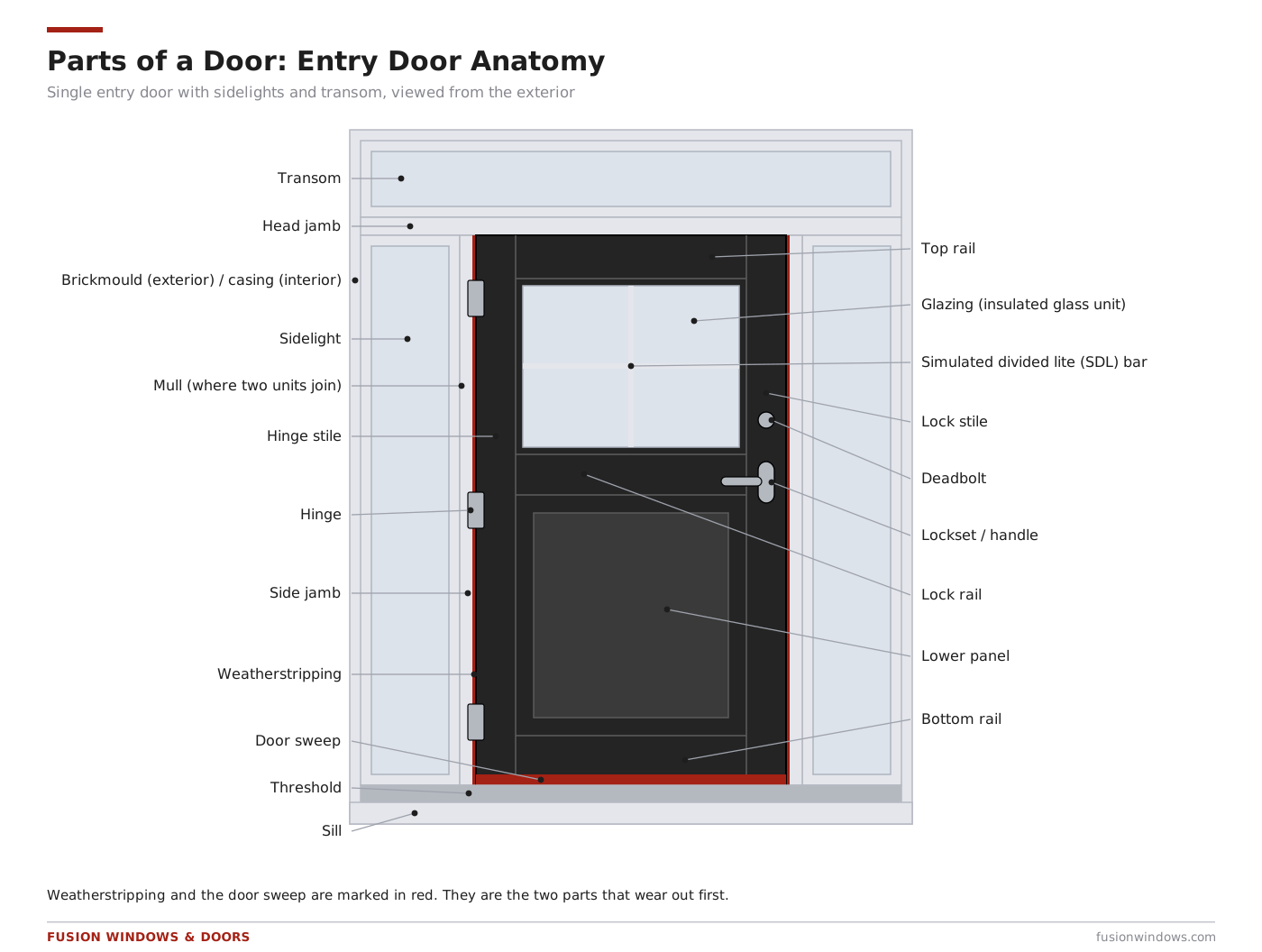
Traditional front doors are defined by raised panel construction, symmetrical design, and decorative detail. Four or six-panel configurations are the most common. They typically feature glass in the upper portion of the door, often paired with sidelights and a transom above the entry.

This style suits a wide range of home types and remains the most commonly specified door in established Los Angeles neighborhoods. Colonial Revival homes in Hancock Park, Windsor Square, and San Marino pair well with traditional paneled entries in painted wood or fiberglass.

Hardware for traditional doors leans toward brass, aged bronze, or brushed nickel with decorative ridges and curves. Bold colors like navy, forest green, and deep red perform well on traditional entries against light-colored facades.

Craftsman Front Doors

Craftsman doors reflect the Arts and Crafts movement’s emphasis on handmade quality, natural materials, and functional design. They tend to be wider rather than taller in proportion, with detailed woodwork, geometric glass inserts in the upper third of the door, and understated hardware.

Defining features:

  • Glass panels concentrated in the upper section
  • Vertical or diamond grille patterns in the glass
  • Rich wood stains in warm browns like mocha or espresso
  • Simple, functional hardware in black, distressed bronze, or distressed nickel
  • Symmetrical sidelights flanking the entry

Craftsman bungalows in Pasadena, Highland Park, South Pasadena, and Angelino Heights are some of the best-preserved examples of this style in the region. A properly specified Craftsman door on one of these homes is an architectural asset that contributes directly to property value.

Spanish and Arched Front Doors

Spanish and arched doors are the natural choice for Southern California’s most distinctive residential style. Spanish Colonial Revival homes across Hancock Park, Beverly Grove, Miracle Mile, and Manhattan Beach call for entries that echo the home’s arched openings, stucco walls, and wrought iron details.

Arched doors come in several configurations:

  • Standard arch: Rectangular body with a gentle curve at the top
  • Full Spanish arch: A pronounced rounded top that mirrors the home’s window and doorway openings
  • Gothic arch: A pointed top, less common in residential applications but distinctive on Tudor-influenced homes

Materials for Spanish-style entries lean toward solid wood, often knotty alder or walnut, with dark iron hardware. The combination of thick plank construction, dark metal, and richly textured wood surfaces suits the hacienda aesthetic that defines much of Southern California’s historic residential architecture.

Farmhouse Front Doors

Farmhouse doors blend traditional construction with a relaxed, unpretentious character. The classic version features a glass panel in the upper half and solid paneling or crossbuck detailing in the lower half. The modern farmhouse variation strips back some of the ornament and pairs simpler paneling with black hardware and clean lines.

Color plays a large role in farmhouse entries. Classic versions use rich earthtones, canvas white, or forest green. Modern farmhouse versions often go black with thin grilles. Both work well on ranch-style homes in the San Fernando Valley, Culver City, and Mar Vista, as well as on the newer farmhouse-influenced builds that have become common across the region.

Dutch and Stable Doors

Dutch doors split horizontally at the midpoint, allowing the top and bottom halves to operate independently. They function as a standard door when both halves are closed and locked, but can open the top half while keeping the bottom closed for ventilation, light, or to keep children and pets inside.

This style has seen a real resurgence in Southern California over the past few years, particularly on cottage-style homes, bungalows, and informal residential entries. The look is charming without being fussy, and the functional split design suits the indoor-outdoor lifestyle that LA homes are built around.

Double Front Doors

Double doors make a strong architectural statement and work best on homes with wide, symmetrical entries. They expand the opening significantly, which improves accessibility and allows more natural light into the foyer. Mediterranean Revival homes in Manhattan Beach and Redondo Beach, large traditional homes, and luxury new construction all pair well with double entries.

The tradeoff is cost and weatherproofing. Two doors require more precise installation to seal correctly at the meeting point, and hardware costs approximately double a single door. For homes where the entry width and architectural scale support it, the visual impact justifies both.

Pivot Front Doors

Pivot doors rotate on a central or offset vertical axis rather than hinging at the side. They open in both directions, create a dramatic entry experience, and are one of the most-requested styles in contemporary luxury home design right now.

Full-height pivot doors in steel, aluminum, or wood are appearing on high-end builds across Bel Air, Pacific Palisades, and Malibu. They suit architecture where the door is meant to be a design focal point rather than a background element. Lead times are longer and installation requires more structural preparation than standard hinged doors, so plan early if this is your specification.

Front Door Materials: Which One Is Right for Your Home

Material choice affects how your door looks, how long it lasts, how much maintenance it requires, and how well it performs in Southern California’s specific climate conditions.

MaterialLifespanMaintenanceBest Style MatchSoCal Consideration
Wood10 to 30 yearsHighCraftsman, Spanish, Traditional, FarmhouseUV and heat degrades finish faster than in milder climates
Fiberglass25 to 40 yearsLowAny styleResists warping and UV; best all-around for SoCal
Steel20 to 35 yearsLow to moderateModern, Farmhouse, TraditionalCan dent; coastal salt air requires protective coating
Aluminum25 to 40 yearsLowModern, Pivot, ContemporaryThermally broken versions required for energy performance

Wood

Wood delivers warmth, natural grain, and the most authentic look for Craftsman, Spanish Colonial, and traditional entries. It’s highly customizable in size, profile, and finish. The tradeoff is maintenance. In Southern California’s UV-intense climate, an unprotected wood door can fade, crack, or warp faster than it would in cooler regions. Annual refinishing or resealing keeps wood performing well, but it’s a real commitment over the life of the door.

Hardwoods like knotty alder, walnut, mahogany, and white oak are the most common choices. Each has a distinct grain character that interacts differently with stain.

Fiberglass

Fiberglass is the most practical material for Southern California homes across the widest range of styles. It resists warping from heat cycling, holds up against UV exposure without the maintenance commitment of wood, and can be manufactured to convincingly replicate wood grain. Most fiberglass doors carry strong manufacturer warranties covering finish adhesion and structural performance.

For homeowners who want the look of wood without the upkeep, a fiberglass door with a quality wood-grain finish is the answer. Brands like Andersen and Marvin offer fiberglass entry doors in configurations that suit everything from Craftsman bungalows to contemporary builds.

Steel

Steel doors offer the highest security rating of any material and are an excellent choice for modern and farmhouse styles where clean, flat-panel construction is the design goal. They’re factory-finished and require very little maintenance beyond periodic cleaning.

The main limitation is that steel dents on impact and conducts heat unless insulated. For coastal properties, a quality powder-coat finish is non-negotiable — bare or inadequately finished steel corrodes in salt air environments.

Aluminum

Thermally broken aluminum is the premium material for modern and contemporary entries, particularly on luxury builds where slim profiles and large-format glass are part of the design. Standard aluminum conducts heat readily, which works against energy performance in a hot climate. A thermally broken frame inserts a non-conductive barrier between the interior and exterior sections, resolving that problem.

Aluminum’s strength allows for larger configurations than wood or fiberglass at comparable weight, which is why pivot doors, full-height entries, and oversized double doors are almost always specified in aluminum. Our door installation services cover the full range of aluminum entry door systems from the brands we carry.

Glass Options for Front Doors

Glass transforms an entry. It brings light into the foyer, adds visual interest, and changes the character of the door entirely. Here are the main configurations:

Full glass panels run the height of the door and are most common on modern and contemporary entries. They maximize light but reduce privacy. Frosted, textured, or tinted glass addresses privacy concerns while preserving the look.

Upper third glass is the classic position for Craftsman and farmhouse entries. It brings in light without exposing the interior, and the smaller glass area is easier to pair with decorative grilles.

Sidelights are fixed glass panels installed on one or both sides of the door. They dramatically increase the light in an entry foyer without changing the door itself. Sidelights are standard on traditional and colonial entries and increasingly common on modern entries as narrow fixed panels.

Transoms sit above the door and add light and architectural height to an entry. They’re associated with traditional and historic entries but appear on contemporary builds as well, particularly when ceiling height allows for the additional visual element.

Decorative glass options include:

  • Clear: maximum light, no privacy
  • Frosted or sandblasted: diffused light, good privacy
  • Textured: privacy with visual interest
  • Etched or art glass: Craftsman and period entries, custom designs
  • Tinted: reduces solar heat gain, relevant for west-facing entries in inland LA

For south and west-facing entries in Southern California’s inland climate zones, a Low-E coating on any glass panel reduces solar heat gain without affecting appearance. It’s worth specifying on any door that takes direct afternoon sun.

Trending Front Door Styles in 2025 and 2026

These are the styles and details generating real demand right now in the Los Angeles market.

Pivot doors are the most-requested upgrade on luxury new construction and high-end renovations. Full-height steel or aluminum pivot entries on contemporary homes have moved from architectural exception to expected feature on builds above a certain price point.

Black finishes continue to dominate. Matte black on a modern or farmhouse door is the most-specified color combination in the region right now. It reads as clean and intentional against white, gray, or warm stucco exteriors.

Mixed materials pair steel with wood, or painted aluminum with natural wood panels, to create contrast within the door itself. The approach adds depth without additional trim or decorative detail.

Arched entries are gaining ground again, particularly on new construction that draws from Mediterranean and Spanish Colonial precedents. An arched opening with a custom wood door is one of the most consistent requests on high-end residential projects in Hancock Park, Brentwood, and Pacific Palisades.

Bold color on traditional entries has been building for several years and shows no sign of slowing. Deep ruby red, navy, and forest green are all performing well on traditional and farmhouse doors against neutral-colored facades. The door becomes the intentional focal point of the exterior.

Matching Your Front Door to Your Home’s Architecture

This is the question most guides skip. Here’s a direct reference by home type.

LA Home StyleNeighborhoodsRecommended Door StyleRecommended Material
Spanish Colonial RevivalHancock Park, Beverly Grove, Windsor SquareArched, plank wood, iron hardwareSolid wood, knotty alder
Craftsman BungalowPasadena, Highland Park, South PasadenaCraftsman with upper glass and grillesWood or high-quality fiberglass
Mid-Century ModernLos Feliz, Hollywood Hills, EncinoModern flat panel, pivot, minimal hardwareAluminum, fiberglass
Mediterranean RevivalManhattan Beach, Redondo Beach, San PedroDouble entry, arched, decorative glassWood, fiberglass
Contemporary / New BuildMalibu, Pacific Palisades, Bel AirPivot, full glass panel, modern slabAluminum, steel
Ranch StyleSan Fernando Valley, Culver City, Mar VistaFarmhouse, traditional panel, DutchFiberglass, wood
VictorianAngelino Heights, Carroll AvenueTraditional paneled, decorative glass, ornate hardwareWood, fiberglass

The table above is a starting point, not a rule. Many Los Angeles homes blend architectural details from multiple styles, and the right door often works across categories. If you’re unsure, the safest approach is to match the door’s panel profile and material to the dominant material on your home’s exterior, then let hardware and color do the style-specific work.

Hardware and Color: The Details That Finish the Look

Hardware and color are where a door goes from functional to finished. Both decisions are easier to make once you’ve locked in the style and material.

Hardware finishes by door style:

Door StyleRecommended Hardware Finish
Modern / ContemporaryMatte black, brushed nickel, concealed
CraftsmanDistressed bronze, matte black, oil-rubbed bronze
TraditionalPolished brass, aged bronze, brushed nickel
Spanish / ArchedDark iron, oil-rubbed bronze, wrought iron
FarmhouseMatte black, aged bronze, simple lever handles
PivotOversized lever in black or brushed metal

Paint vs. stain: Painted doors give you more color control and are easier to refresh. Stained doors preserve the natural grain character of wood and age distinctively. On fiberglass doors, high-quality stain finishes convincingly replicate wood grain at lower maintenance cost. If your home’s exterior uses natural wood detailing, a stained door creates continuity. If the exterior is primarily painted surfaces, a painted door in a contrasting color tends to read better.

Popular door colors for Los Angeles homes:

  • Matte black: modern, farmhouse, contemporary
  • Forest green: traditional, farmhouse, Craftsman
  • Navy blue: traditional, colonial, classic neighborhoods
  • Deep red: traditional entries on warm-toned facades
  • Natural wood stain: Craftsman, Spanish Colonial, Mediterranean
  • White or canvas: farmhouse, clean modern, coastal

Hardware finish and door color should work together, not compete. A matte black door with polished brass hardware creates conflict. A navy door with aged bronze hardware creates continuity. Match the undertones in both before committing.

Frequently Asked Questions About Front Door Styles

Which Front Door Material Holds Up Best in Southern California?

Fiberglass is the most practical choice for most LA homes. It resists warping from heat cycling, holds up against UV exposure without the maintenance commitment of wood, and comes in configurations that suit almost every architectural style. For luxury builds and contemporary entries where design matters as much as performance, thermally broken aluminum is the premium choice. Wood is the right call when authenticity is the priority and the owner is committed to regular maintenance.

Do Front Doors with Glass Panels Compromise Security?

Not significantly, with the right glass specification. Laminated glass, which bonds two layers with an interlayer that holds the glass together on impact, resists forced entry far better than standard glass. Tempered glass is stronger than standard glass but shatters on failure. For any entry door with glass in or adjacent to the lock zone, laminated glass is the right specification.

Is a Pivot Door Practical for a Standard Home?

A pivot door works on any home with sufficient structural support at the pivot point and an appropriately scaled entry. It’s not exclusively a luxury product, though it’s most commonly specified on contemporary high-end builds. The main practical considerations are ceiling height, floor clearance for the swing arc, and rough opening width. A structural assessment is part of any proper pivot door installation.

Should I Replace All Exterior Doors at the Same Time?

Not necessarily. Front door replacement is almost always a standalone project. If your side entry, garage, or patio doors are performing well, there’s no technical reason to replace them simultaneously. That said, matching finish and hardware across all exterior doors creates visual coherence that’s worth considering if multiple doors are approaching end of life at the same time.

How Much Does a New Front Door Cost in Los Angeles?

Costs vary widely by material, style, and configuration. A standard fiberglass entry door installed runs $1,500 to $4,000 for most residential projects. A wood door in a custom configuration runs $3,000 to $8,000 installed. Full-height aluminum or steel pivot doors in luxury configurations start around $8,000 and go up significantly from there. The best way to get an accurate number for your specific project is an in-home assessment from a licensed installer.

At Fusion Windows and Doors, we carry entry door systems from Andersen, Marvin, Fleetwood, and other brands across the full range of styles covered in this guide. Our team serves homeowners throughout Los Angeles and the surrounding communities. If you’re ready to choose a new front door and want expert guidance on what suits your home’s architecture, get a free quote and we’ll walk you through the options in person.

Door Installation Cost in 2026: How Much It Really Costs (Ranges, Labor, & Tips)

door installation

Thinking about putting in a new door? It doesn’t matter; it’s upgrading your front entry for better curb appeal, swapping an old interior door, or finally getting those patio sliders you’ve been dreaming about. One of the first questions that comes up is simple: how much will it cost me?

The short answer: door installation isn’t one-price-fits-all. The cost depends on the type of door, the material, and whether you’re hiring a pro or going the DIY route. But don’t worry – we’ll break it all down, with ranges, examples, and tips to help you plan (and save).

Quick cost snapshot
Here’s a fast look at the averages before we go into the details:

Upgrade Your Home with Premium Doors

Discover a wide selection of top-quality doors, expertly installed to enhance your home’s style, comfort, and energy efficiency.

Get Your Free Quote
Door Type Typical Installed Cost Usual Range
Most doors (overall average) ~$750 $300 – $1,500
Exterior/front door ~$1,200 $400 – $2,000+
High-end/custom doors $2,500+ Up to $5,000+
average door installation cost

At-a-Glance Door Installation Costs by Type

Not all doors are created equal – some slip right into place in under an hour, while others need framing work, heavy lifting, and a full afternoon. To give you a bird’s-eye view, here’s a cost breakdown by the most common door types, including the door itself, labor, total installed price, and how long you can expect the project to take.

Door Type Typical Door Price Typical Labor Total Installed Range Time to Install
Interior hinged $50 – $350 $120 – $350 $170 – $700 1–2 hours
Pre-hung interior $150 – $700 $120 – $400 $185 – $1,100 1–2 hours
Front/entry $800 – $2,000+ $230 – $800 $400 – $2,800+ 3–8 hours
Patio sliding $1,500 – $2,500 $150 – $800 $650 – $3,500 4–8 hours
French doors $1,500 – $4,000 $200 – $1,100 $650 – $5,100 4–8 hours
Pocket door $200 – $1,000 $300 – $2,500 $500 – $3,500 4–6 hours
Barn door $200 – $2,000+ $200 – $3,000 $400 – $5,000+ 2–5 hours

Full Breakdown by Door Type

Here’s where costs really start to shift. Each type of door comes with its own price tag, labor needs, and installation quirks. Let’s break them down one by one:

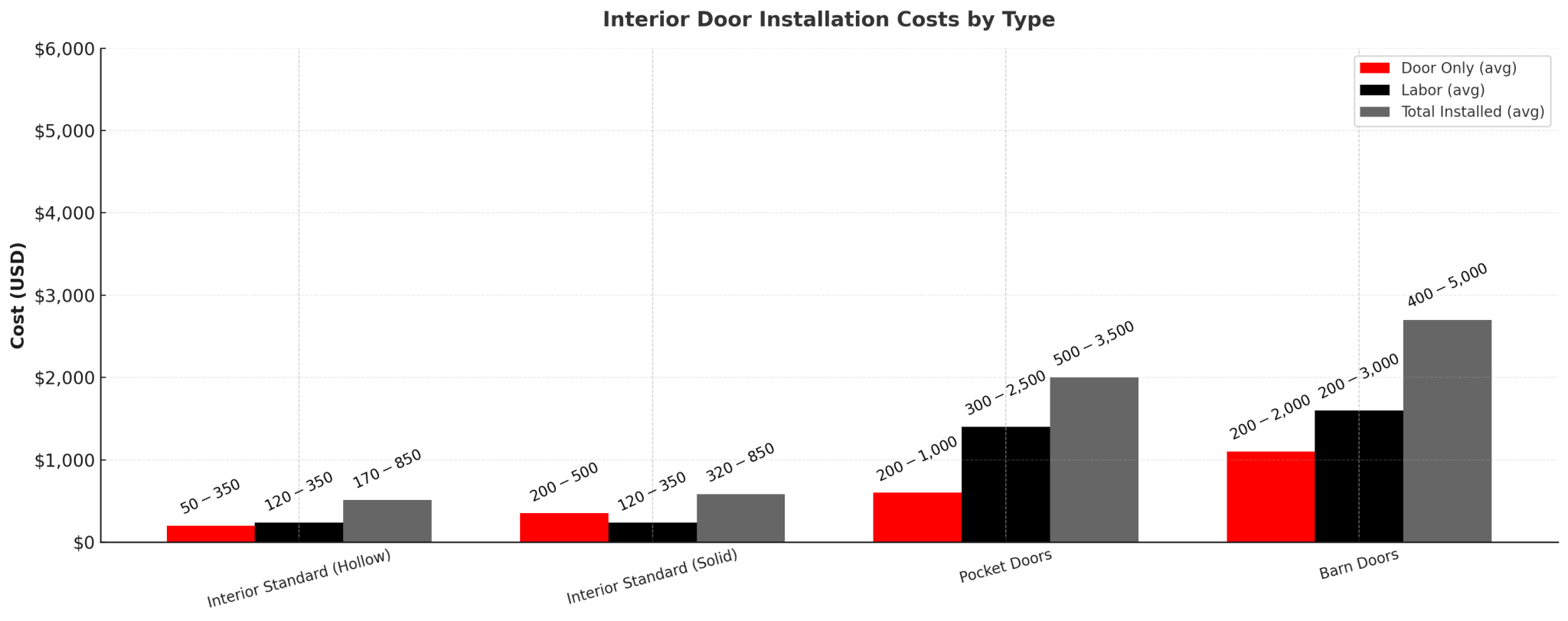
Interior Standard Doors (Hollow & Solid Core)

  • Overview: These are your everyday bedroom, bathroom, or office doors. Hollow core doors are lightweight and affordable, while solid core or solid wood doors add soundproofing and durability.
  • Typical door-only cost: $50 – $350 (hollow) | $200 – $500 (solid core/wood)
  • Labor: $120 – $350
  • Total installed: $170 – $850
  • Difficulty: Easy – most can be installed in under 2 hours.
  • Common extras: Decorative trim, painting, upgraded handles/locks.

Interior Specialty Doors

Pocket Doors

  • Slide into a wall cavity, great for saving space.
  • Door-only: $200 – $1,000
  • Labor: $300 – $2,500 (high because of wall work)
  • Total installed: $500 – $3,500
  • Difficulty: Medium to hard – requires framing changes.
  • Extras: Soft-close tracks, wall repair/finishing.

Barn Doors

  • Trendy sliding doors hung on a track above the opening.
  • Door-only: $200 – $2,000+
  • Labor: $200 – $3,000 (wide range depending on custom carpentry)
  • Total installed: $400 – $5,000+
  • Difficulty: Moderate – wall reinforcement may be needed.
  • Extras: Custom hardware, decorative finishes.
Interior doors installation cost

Exterior Doors

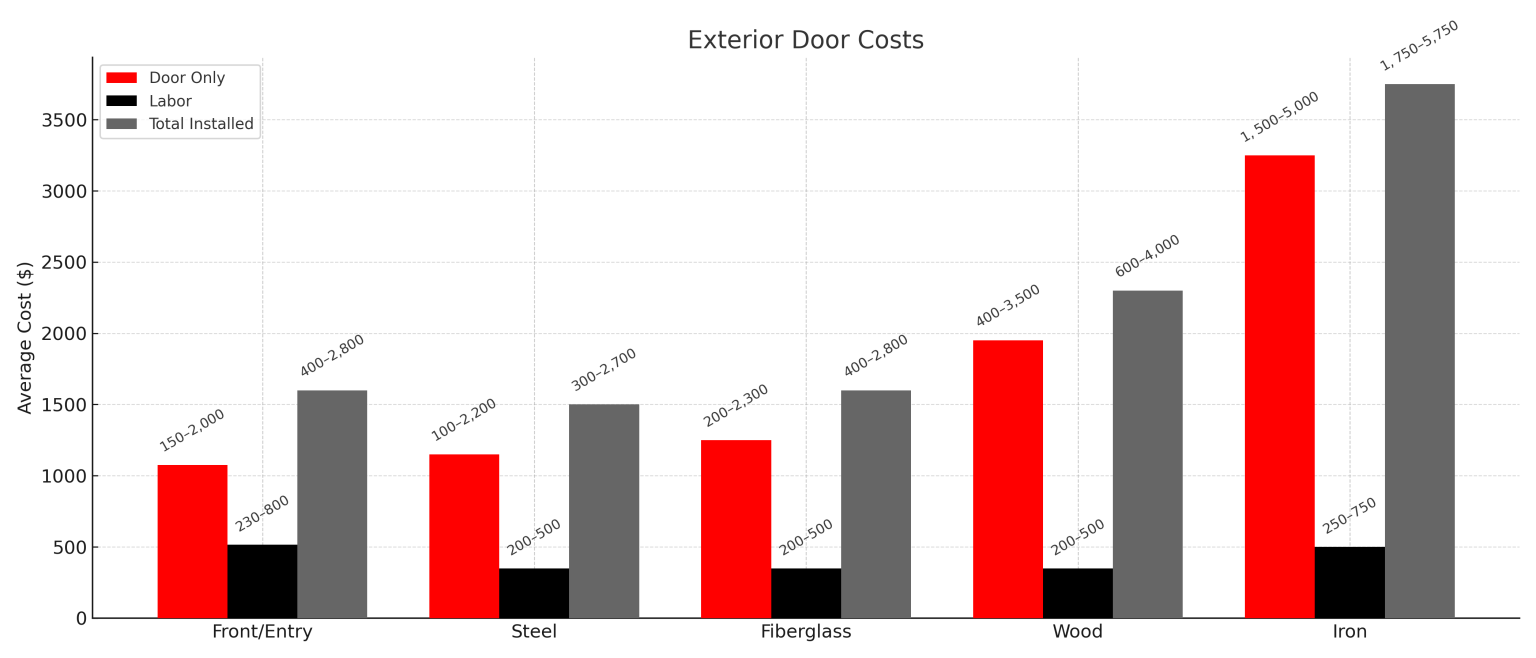
Front/Entry Doors (General)

  • First impression of your home, big curb appeal factor.
  • Door-only: $150 – $2,000+
  • Labor: $230 – $800
  • Total installed: $400 – $2,800+
  • Difficulty: Moderate – heavier, weatherproofing required.
  • Extras: Sidelights ($400 – $2,000+), transoms ($300 – $900).

Steel Doors

  • Durable, secure, and more affordable than wood.
  • Door-only: $100 – $2,200
  • Labor: $200 – $500
  • Total installed: $300 – $2,700
  • Extras: Insulation core, glass inserts.

Fiberglass Doors

  • Energy-efficient, mimics wood grain, and has low maintenance.
  • Door-only: $200 – $2,300
  • Labor: $200 – $500
  • Total installed: $400 – $2,800
  • Extras: Decorative glass, insulated cores.

Wood Doors

  • Classic and customizable, but higher maintenance.
  • Door-only: $400 – $3,500
  • Labor: $200 – $500
  • Total installed: $600 – $4,000+
  • Extras: Carvings, sidelights, weatherproofing.

Iron Doors

  • Heavy, ornate, and highly secure, often custom-made.
  • Door-only: $1,500 – $5,000
  • Labor: $250 – $750
  • Total installed: $1,750 – $5,750+
exterior door installation cost

Patio & French Doors

Sliding Patio Doors

  • Open horizontally, maximize natural light.
  • Door-only: $500 – $2,500
  • Labor: $150 – $800
  • Total installed: $650 – $3,500

French Doors

  • Elegant double-hinged doors swing inward/outward.
  • Door-only: $450 – $4,000
  • Labor: $200 – $1,100
  • Total installed: $650 – $5,100

Garage Doors

  • Large and mechanical, often including opener systems.
  • Door-only: $700 – $4,500
  • Labor: $1,500 – $2,000
  • Total installed: $2,200 – $6,500
  • Difficulty: High – requires professional install for safety.

Door Installation Cost Factors (Why Prices Vary)

If two neighbors both replace a front door, why might one pay $800 and the other $2,500? It all comes down to cost factors. Here’s what drives the final price:

  • Material – Wood (classic but pricey), fiberglass (mid-range, low maintenance), steel (secure, affordable), iron (luxury), aluminum/composite (budget-friendly).
  • Pre-hung vs. Slab – Pre-hung (already in a frame) is faster/cheaper to install ($188–$550), while slab doors require extra framing and hardware ($325–$1,150).
  • Size & Custom/Oversized – Standard sizes save money; oversized/custom builds skyrocket costs.
  • Framing & Structural Work – Moving/widening openings, repairing rot, or adding headers can add $500–$2,000.
  • Hardware & Locksets – Basic knobs start at $20, while smart locks run $120–$500.
  • Glass, Sidelights & Transoms – Decorative glass can add $300–$1,000+, sidelights $400–$2,000+, transoms $300–$900.
  • Insulation & Weatherproofing – Energy-efficient upgrades ($100–$500) improve comfort but increase upfront cost.
  • Labor Rates & Regional Differences – Cities/regions with higher labor costs (like NYC or San Francisco) can be double rural prices.
  • Disposal & Permit Costs – Old door removal runs $25–$200; permits (when structural work is involved) vary by location.

Example cost scenario:
If you choose a fiberglass entry door ($1,000), add sidelights ($1,200), upgrade to a smart lock ($250), and opt for professional installation ($500), your estimated total is approximately $2,950.

Labor: What Pros Charge & Installation Time

Professional door installation labor is usually charged per door or by the hour. You can expect:

  • Hourly rates: $40 – $90 per hour for a handyman or carpenter.
  • Flat per-door pricing: $100–$300 for a standard interior door, and $200–$500 for exterior or heavier doors.
  • Time to install:
    • Interior pre-hung doors: 1–2 hours (prep, jamb/frame check, shimming, trim).
    • Exterior or heavier doors: 2–4 hours (including extra sealing, weatherproofing, and hardware).
    • Custom doors or complex installs: Half a day to a full day.
    • Paint or finishing work: Adds several hours to a full day, depending on coats needed.

Troubleshooting & Added Labor Costs

Some issues can drive up labor and material costs significantly:

  • Unlevel floors or walls: Require extra shimming, cutting, or frame adjustment (+$50–$200).
  • Rot or mold in framing: May require new lumber, moisture barrier, or full frame replacement (+$150–$400).
  • Mismatched jambs or rough openings: Need reframing, sanding, or custom cuts (+$100–$250).

In Short: while a simple interior door might be installed in under two hours, tricky conditions can push the job into a half-day or more, with extra costs for carpentry fixes.

Frame, Jamb, and Opening Work

The price of your door installation depends heavily on whether you’re reusing an existing frame or building a new one.

  • Replacing jambs only: $75 – $200 in materials, plus $150 – $300 labor.
  • Installing into an existing frame: Cheapest option; labor focuses only on hanging and hardware.
  • Widening or moving a door opening: $300 – $800 (requires cutting drywall, reframing, and moving studs).
  • Adding rough framing & a header for a new door in a wall: $500 – $1,500 (a carpenter or general contractor is required).

Who to call:

  • Handyman → Best for hanging pre-hung interior doors or swapping hardware.
  • Carpenter/GC → Needed if you’re altering walls, adding headers, repairing rot, or resizing openings.

Pro tip: Companies like Fusion Windows & Doors don’t just sell a wide variety of doors (from sleek modern to secure entry options) – they also handle professional installation. That means you get both the product and expert labor from one place, saving you the hassle of coordinating multiple contractors.

Hardware & Accessory Costs

Beyond the door itself, the hardware and accessories add to the final bill. Here’s a quick reference table:

Hardware / Accessory Typical Price Range Notes
Standard interior handle/knob $20 – $50 Basic privacy or passage sets
Deadbolt (single/double) $30 – $80 Security upgrade for entry doors
Smart lock $150 – $300 Keyless entry, Wi-Fi/Bluetooth
Hinges (set of 3) $10 – $30 Standard brass or steel
Weather-stripping kit $15 – $40 Essential for exterior doors
Kickplate $20 – $50 Protects lower door surface
Threshold/sill $30 – $70 For sealing exterior entryways

Hardware choices can add anywhere from $50 for basics to $300+ for high-end smart locks and accessories.

Permits, Codes, and Fire-Rated Requirements

In most cases, simply replacing an interior door doesn’t require a permit. But if you’re replacing an exterior door and altering the structure of the wall, moving an opening, or working on a commercial property, local building codes usually require permits and inspections. Always check with your city or county before starting, as fees can range from $50 to $300, depending on the location.

Another cost factor is fire-rated doors. These are required in certain spaces, like between an attached garage and living area, or in multifamily and commercial buildings. Fire-rated doors are heavier, require special hardware, and cost more than standard models – typically $300 to $800 installed.

DIY vs. Hiring a Pro (Decision Checklist)

Not every door project needs a professional. Some installs are straightforward, while others require carpentry skills, specialty tools, and knowledge of building codes.

DIY-friendly installs:

  • Swapping a slab into an existing frame (if the jamb is square and in good condition).
  • Installing a pre-hung interior door in a standard opening.

Best left to pros:

  • Exterior door installs (especially with weatherproofing).
  • Moving or widening openings (structural work).
  • Fire-rated or code-specific installations.

DIY safety checklist:

  1. Measure the opening carefully – mistakes lead to costly returns.
  2. Gather tools: drill/driver, level, shims, saw, pry bar, hammer, measuring tape.
  3. Plan enough time: a simple swap typically takes 2–3 hours, while framing or exterior work requires more time.
  4. Watch for common pitfalls: uneven floors, out-of-square jambs, and damage to drywall or trim.
  5. Have a helper; doors are heavy and awkward to maneuver alone.

How to Save Money

Door installations don’t have to break the bank. A few smart choices can lower your costs significantly:

  • Buy door-only vs. bundled installs: If your jamb and trim are in good shape, replacing just the slab is cheaper than a pre-hung unit.
  • Reuse existing jamb and hardware: Saves on labor and material costs.
  • Shop standard sizes: Custom-sized doors cost 20–40% more.
  • Time it right: Contractors may offer discounts during off-seasons (late fall/winter).
  • Check for local deals: Home improvement stores and installers often run promotions on installation packages.

When to Invest

While saving money matters, sometimes it pays to spend more upfront. Higher-quality doors and professional installs bring:

  • Better security: Especially with reinforced exterior doors and upgraded locks.
  • Energy efficiency: Well-sealed entry doors reduce heating/cooling costs.
  • Resale value: Curb appeal improvements (like a new front door) can yield one of the best ROIs in home renovations.

Hiring a Professional for Door Installation

Door installation may seem straightforward, but proper installation ensures optimal security, energy efficiency, and long-lasting performance. Precision in measurements, hardware fitting, weatherproofing, and alignment can make the difference between a door that lasts and one that causes drafts or damage.

Fusion Windows & Doors provides professional installation services that cover everything from removing old doors to precise fitting and finishing. Their team works with a wide range of door types, including entry, patio, French, and custom designs, ensuring each door meets both functional and aesthetic standards. They offer an extensive range of high-quality doors from renowned manufacturers, including Milgard, Marvin, Andersen, Fleetwood, and LaCantina.

By choosing Fusion Windows & Doors, you’re partnering with a company that prioritizes quality, customization, and customer satisfaction, ensuring that your door installation project is executed to the highest standards.

Installing or replacing a door is more than a home upgrade; it’s an investment in comfort, security, and style. Understanding costs, materials, and installation options helps you plan wisely and avoid surprises.

By considering DIY vs. professional installation, potential upgrades, and labor factors, homeowners can ensure a long-lasting, high-quality result. Thoughtful planning means choosing the right door and installation method for your needs, whether you’re boosting curb appeal, security, or interior style.

Fusion Windows & Doors provides premium brands, precision installation, and tailored guidance for homes across Los Angeles and Southern California.

Get a free quote today to get professional insight into your home’s window lifespan, performance, and best replacement options.

Frequently Asked Questions

Replacing a door frame typically adds $120–$350 to the project if it’s a simple interior frame. For exterior doors that require structural reinforcement or rot repair, costs can range from $400 to $700+.

In some cases, yes, but it depends on the condition of the hardware and whether it fits the new door’s dimensions. Many homeowners choose to upgrade to new locks or handles for better function and style. Installers can usually reuse hinges if they’re still in good shape.

Most professional installers include removal and disposal in their pricing, but it’s always worth confirming before signing the contract. If not included, you may be charged an additional $30–$100 for disposal.

Basic interior hollow-core hinged doors are the most affordable, typically costing between $150 and $350 installed. On the other end of the spectrum, custom entry systems, French doors, or garage doors can cost several thousand dollars.

Euroline Steel Windows and Doors vs. Cheap Alternatives: What LA Homeowners Need to Know

Steel windows and doors are a significant investment in any home. Euroline steel windows and doors are one of the most trusted names in the category, manufactured in California and built to exacting standards. But cheaper alternatives, many imported from China, have flooded the market. 

This article breaks down the real differences in materials, manufacturing, customization, warranty, and long-term cost so you can make an informed decision.

Why Steel Windows Attract Cheaper Knockoffs

Steel windows and doors sit at the premium end of the fenestration market. Slim profiles, expansive glass, architectural drama. That price premium makes the category a target for mass-produced imports that mimic the look without matching the build quality.

The problem is that steel windows are a permanent part of your home’s structure. Unlike furniture or fixtures, replacing them is a major project. Getting it wrong the first time is expensive.

Cheap alternatives are everywhere online, often sold under vague brand names with no disclosed origin. Some are marketed through budget installers who don’t specialize in steel. By the time quality issues appear, the warranty claim process is a nightmare or the seller is gone entirely.

Where Euroline Steel Windows and Doors Are Actually Made

Euroline manufactures every product at their facility in Yorba Linda, California. Every window and door is hand-crafted by trained artisans entirely in-house. Nothing is outsourced to third-party factories.

The company was founded by Elyas Balta, an engineer with a background in applied physics and a family lineage of steel workers. He built Euroline around one principle: no product leaves the factory without a quality stamp of approval. That standard has held for decades.

This matters because many Chinese alternatives are not made by the company selling them. They are sourced from the lowest-bidding factory, sometimes through a trading company with no manufacturing capability of its own. You have no way of knowing what you’re actually getting until it arrives, and often not even then.

The Steel Quality Gap Between US-Made and Imported Products

This is where the difference is most significant, and least visible to the naked eye.

American steel manufacturers operate under standards set by the American Society for Testing and Materials (ASTM), which govern steel composition, structural performance, and weld behavior. These are not voluntary guidelines. Products sold for residential construction need to meet them.

Chinese steel does not face the same requirements. There are documented cases of manufacturers adding boron to their steel to qualify for tax rebates. Boron causes welds to crack under stress and compromises structural integrity. It is rarely disclosed to the buyer.

Beyond the base steel, here is how the surface treatment compares:

Euroline’s process:

  • Zinc metalize rust-protection treatment applied to every frame
  • Galvanic protection layer against corrosion
  • Industrial paint barrier on top, available in a wide range of finishes
  • Each stage is quality-checked before moving to the next

Typical Chinese import:

  • Basic paint coat applied over bare or minimally treated steel
  • No zinc or galvanic protection layer
  • Batch-to-batch consistency varies significantly
  • No independent quality verification

In Southern California’s coastal environment, that difference shows up fast. Salt air, marine layer humidity, and UV exposure degrade an unprotected steel frame in a fraction of the time it takes to break down a properly treated one.

Custom-Made vs. Mass-Produced and Windows and Doors: How It Affects Installation

Every Euroline product is built to your exact architectural specifications. The frame is fabricated to fit your opening. Hardware configurations, sightline dimensions, swing direction and finish color are all specified upfront and built to order.

Mass-produced imports work the other way. They are manufactured in standard sizes and configurations, then adapted on-site to fit your opening. That means shimming, trimming, and workarounds. It also means gaps in the weather seal, inconsistent hardware alignment, and a final product that doesn’t quite sit right.

For your installer, this creates real problems. A licensed contractor who installs a custom-fabricated product can stand behind the result. An installer working around a poorly fitting import is absorbing liability for a product they didn’t spec and can’t control.

This is one reason why professional door installation contractors with Euroline experience won’t touch cheap imports. The installation quality is only as good as the product it’s built around.

Two Euroline Collections and Which One Is Right for Your Home

Euroline offers two product lines. Understanding the difference helps you specify the right product for your project from the start.

The True Steel Collection

The True Steel Collection features ultra-slim ¾” sightlines, the narrowest profile Euroline produces. Frames nearly disappear, letting light and glass define the space. This line works best for:

  • Modern and contemporary architecture
  • Historic restorations and loft conversions
  • Projects where the purest steel aesthetic is the priority
  • Spaces where thermal performance is secondary to character

True Steel is available in casement windows, French doors, partitions, and custom configurations.

The Thermal Steel Collection

The Thermal Steel Collection uses thermally broken profiles that reduce heat transfer while keeping the structural strength and refined look of steel. This line is the right choice for:

  • California homes that need to meet Title 24 energy compliance
  • Coastal properties with salt air exposure
  • Large-format openings like lift and slide doors, pivot doors, and curtain walls
  • Projects where energy efficiency and design both matter

Both collections are fully custom. Lead times and pricing vary by configuration, which is why a consultation with a certified installer matters before you specify anything.

What the Warranty Tells You About a Manufacturer’s Confidence

A warranty is a manufacturer’s statement about how much they trust their own product. Euroline’s warranty structure is one of the clearest signals of that confidence in the category.

Euroline warranty coverage:

  • 10 years on manufacturing defects for factory-finished products
  • 5 years on factory-applied paint finishes
  • 5 years on insulated glass seals
  • Physical address in Yorba Linda, California for all warranty claims

Compare that to what you typically get with Chinese imports. Short warranty periods, often one year or less. Claims requiring international shipping of defective components. Customer service operating in a different time zone. And in many documented cases, companies that rebrand or disappear entirely when negative reviews accumulate, taking outstanding warranty obligations with them.

A short warranty is not just a minor inconvenience. It’s a signal that the manufacturer doesn’t expect the product to perform.

The Cost of Cheaper Steel Windows in Southern California

The upfront price gap between Euroline and a cheap import looks significant. It is less significant than it appears when you run the numbers over a realistic ownership period.

Steel windows and doors are a 20 to 30-year decision in most homes. Here is what that timeline looks like with each option:

With a cheap import:

  • Lower purchase price
  • Higher installation labor costs due to fit issues
  • Earlier corrosion in coastal climates, typically within 3 to 7 years without proper treatment
  • Replacement or refinishing costs that were not in the original budget
  • Potential impact on home resale value if condition is visible

With Euroline:

  • Higher purchase price
  • Clean installation with custom-fabricated components
  • Zinc and galvanic protection built in at the factory level
  • 10-year warranty covering manufacturing defects
  • Long-term performance that holds up in the Southern California climate

The homes in Los Angeles, Malibu, Pacific Palisades, and other coastal communities that carry premium values do so in part because of build quality. Buyers and appraisers notice the difference between steel windows that have held up and ones that haven’t.

FAQs

Are Euroline Steel Windows and Doors Worth the Higher Price?

For a permanent architectural feature in a luxury home, yes. The price difference between Euroline and a cheap import shrinks considerably when you factor in installation costs, corrosion risk in Southern California’s coastal climate, and the likelihood of early replacement. A product built to last 30 years with a 10-year warranty costs less over time than one that needs refinishing or replacement within a decade.

How Do I Know If a Steel Window Product Is Actually Made in China?

The clearest signals are vague brand origin, no disclosed manufacturing address, unusually low pricing, and short or unclear warranty terms. If a seller cannot tell you exactly where the product is made and by whom, that is your answer. Legitimate manufacturers like Euroline list their facility address publicly and stand behind their products with a traceable warranty.

Can Chinese Steel Windows Meet California’s Title 24 Energy Code?

Some imported products claim compliance, but verification is difficult. Title 24 requires specific thermal performance ratings that need to be tested and certified. Euroline’s Thermal Steel Collection is built with thermally broken profiles specifically designed to meet California’s energy standards. With an import, you are often relying on the seller’s self-reported specs with no independent certification to back them up.

Does It Matter Which Installer I Use for Steel Windows and Doors?

It matters significantly. Steel windows and doors are heavy, precise, and unforgiving of improper installation. A frame that is even slightly out of square will bind, leak air, or fail its weather seal over time. Euroline works through authorized dealers and certified installers specifically because proper installation is part of what the product warranty depends on. An unlicensed or inexperienced installer voids that protection entirely.

How Long Does It Take to Get Euroline Steel Windows and Doors?

Because every Euroline product is custom-fabricated to your specifications, lead times are longer than off-the-shelf alternatives. Typical timelines run 10 to 14 weeks from order confirmation depending on configuration and volume. That lead time is a feature, not a drawback. It means your product is being built specifically for your openings, not pulled from a warehouse and shipped in a standard size.

At Fusion Windows and Doors, we are an authorized Euroline dealer and installer serving the Los Angeles area. We carry Euroline because it is a product we are confident installing and standing behind. If you are planning a project and want to see your options in person, request a free quote and one of our specialists will walk you through the right configuration for your home.

The 5 Best Door Companies in Los Angeles

Best Door Companies in Los Angeles
Patio doors

When it comes to choosing the best door company in Los Angeles, homeowners have more than just aesthetics to consider. Energy efficiency, craftsmanship, security, and customization all play major roles in determining which company is right for your project. Whether you’re remodeling your entryway, upgrading interior doors, or outfitting a luxury build with custom pivot doors, selecting a reputable company makes all the difference in quality and long-term performance.

To help guide your decision, we’ve compiled a detailed list of the top 5 door companies in Los Angeles. These companies were chosen based on product variety, customer satisfaction, installation expertise, and value.

Upgrade Your Home with Premium Doors

Discover a wide selection of top-quality doors, expertly installed to enhance your home’s style, comfort, and energy efficiency.

Get Your Free Quote

How We Ranked the Top Door Companies in Los Angeles

Choosing the right door company in Los Angeles requires careful consideration of several key factors:

  • Material Options: Including wood, steel, fiberglass, glass, and aluminum.
  • Design Variety: Availability of modern, traditional, rustic, and artistic designs.
  • Energy Efficiency: Doors that provide proper insulation and reduce energy loss.
  • Customization: Ability to create doors based on personal style and functional requirements.
  • Customer Reviews: Feedback on platforms like Google, Yelp, and Houzz.
  • Industry Reputation: Years in business and recognition by professionals.
  • Certified Installers: In-house vs. subcontracted installation teams.
  • Project Support: Responsiveness during and after installation.
  • Warranty Coverage: Both product and labor warranty terms.
  • Clear Pricing: No hidden charges or surprise fees.
  • Overall Value: Competitive prices paired with strong quality and service.

1. Fusion Windows and Doors – Burbank, CA

Best Overall for Quality, Customization & Full-Service Installation

Fusion Windows and Doors – Burbank, CA

Fusion Windows and Doors is widely regarded as the top door company in Los Angeles, and for good reason. With a reputation built on quality craftsmanship, elite-level customer service, and a curated catalog of premium brands, Fusion offers a true end-to-end solution for discerning homeowners.

What Sets Fusion Apart

Unlike many retailers who only offer limited stock or subcontract installation, Fusion handles everything in-house, from consultation to completion. Their specialists work with you to choose the right doors for your home based on function, budget, and aesthetic goals. Their Burbank showroom features a wide range of products from luxury brands, and their experienced installers ensure every project is finished with precision.

Brands Offered

Fusion is a leading dealer for:

  • Andersen
  • Marvin
  • Fleetwood
  • Milgard
  • LaCantina
  • Velux (Skylights)
  • Windsor

Product Range

  • Custom entry doors (wood, fiberglass, steel)
  • French and sliding doors
  • Pivot doors
  • Bi-fold and multi-slide systems
  • Patio and side doors
  • Energy-efficient doors with insulated glass and weather seals

Services

  • In-depth home consultations
  • Product education and recommendations
  • Custom ordering and sizing
  • Complete professional installation (no outsourcing)
  • Post-installation inspections

Service Areas

Fusion services a wide range of locations, including:

  • Burbank, Pasadena, Glendale
  • Beverly Hills, San Marino
  • Santa Clarita, Thousand Oaks
  • San Fernando Valley, Riverside, San Bernardino

Customer Feedback

Homeowners, contractors, and interior designers rave about Fusion’s product knowledge and installation team. Reviews highlight the team’s professionalism, punctuality, and ability to bring a design vision to life, whether it’s a modern pivot door or a traditional French door. Multiple customers cite improved energy efficiency and curb appeal after installing Fusion products.

“Fusion helped us install a custom bi-fold door system that completely transformed our living room and patio connection. They walked us through every step and handled everything from measurement to cleanup.”

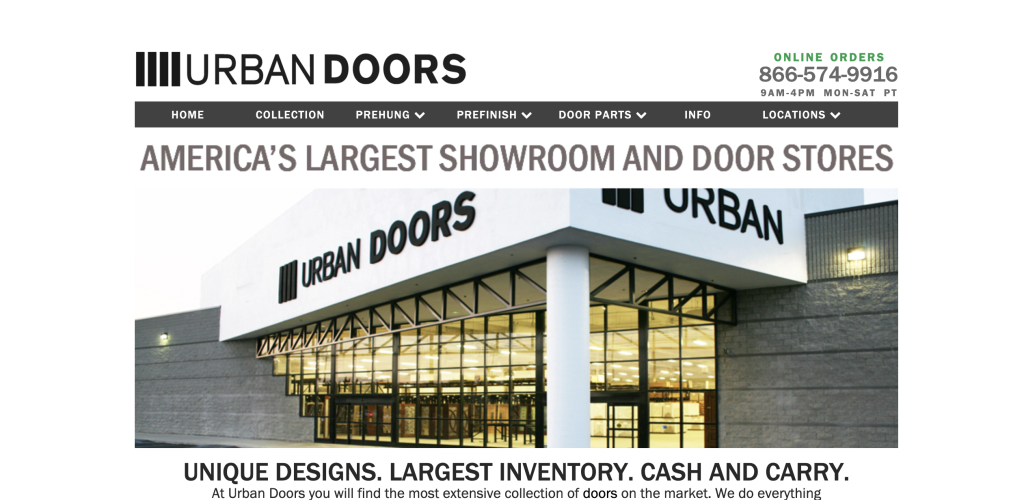
2. Urban Doors – Los Angeles, CA

Best for Custom Design & In-Stock Selection

Urban Doors – Los Angeles, CA

Urban Doors is a massive door manufacturer and retailer offering one of the largest inventories in the U.S. With a 50,000-square-foot showroom and in-house design and fabrication capabilities, they cater to homeowners, designers, and contractors looking for high-end, artistic, and functional doors.

What Sets Urban Doors Apart

Urban Doors does everything in-house, from design and material sourcing to construction and finishing. This vertical integration allows them to offer thousands of doors in-stock for same-day purchase or delivery. Their catalog includes styles from Mediterranean to Moroccan, modern to rustic.

Product Categories

  • Interior and exterior wood doors
  • Fiberglass doors
  • Iron and steel doors with glass
  • Sliding barn doors (up to 60” wide!)
  • Carved and hand-finished artistic doors
  • Cash-and-carry doors ready for immediate pickup

Materials

  • Mahogany
  • Alder
  • White oak, red oak
  • Bamboo, walnut, and custom veneers

Customer Feedback

Urban Doors is praised for its huge variety, fair pricing, and artistic craftsmanship. Many customers and contractors choose them for their design flexibility, immediate availability, and ability to deliver oversized or custom doors at competitive prices.

3. Contractors Wardrobe® – Valencia, CA

Best for Interior Sliding, Shower, and Room Divider Doors

Contractors Wardrobe®

With over 50 years in business, Contractors Wardrobe® (Cw®) is a trusted name in interior door design and manufacturing. Known for stylish wardrobe doors, sliding shower enclosures, and custom room partitions, they bring modern engineering to everyday living spaces.

Specialty Products

  • Sliding wardrobe and mirrored doors
  • Heavy-glass and Duratuf® shower enclosures
  • Painted glass room dividers
  • Custom vanity mirrors and interior partitions

Their uDivide® line of room dividers is especially popular among urban dwellers and modern designers for creating flexible, multi-purpose spaces.

Why They Stand Out

All Cw® products are made in the U.S. at their 258,000 sq. ft. manufacturing headquarters in Valencia. They offer design flexibility with multiple glass options, hardware finishes, and installation configurations. Their Diamond Quality Guide helps customers make selections based on durability, aesthetics, and price point.

Customer Feedback

Cw® is a favorite for interior designers and contractors. Reviews highlight the company’s precision engineering, style options, and long-lasting finishes. While not an entry door company, Cw® is the go-to brand for interior door solutions.

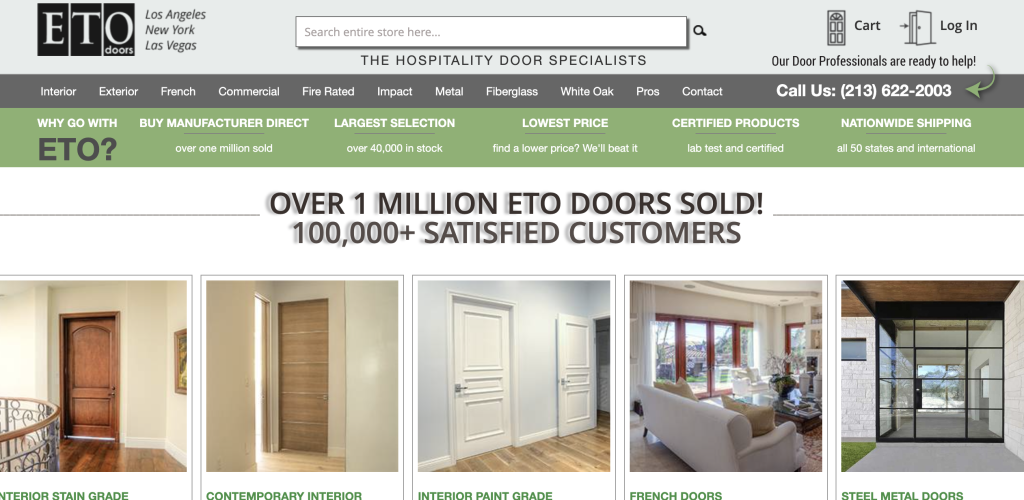
4. ETO Doors – Downtown Los Angeles

Best for Commercial and Hospitality-Grade Doors

ETO Doors

Founded in 2005, ETO Doors is a manufacturer and direct-to-consumer retailer specializing in high-end, performance-tested doors for both residential and commercial use. With over a million doors sold, they cater to architects, hoteliers, and homeowners seeking certified, custom-built options.

Core Offerings

  • Fire-rated and impact-certified doors
  • Commercial steel and metal doors
  • Fiberglass, white oak, and rustic hardwood doors
  • French doors, pivot doors, and decorative entry doors

Special Features

  • Factory-direct pricing
  • FSC-certified wood options
  • Energy Star-rated products
  • Custom sizing for commercial and luxury projects

Customer Feedback

Customers appreciate ETO’s wide variety and direct-to-door pricing. Their Los Angeles showroom gives buyers the chance to see and touch different models before ordering. ETO is highly rated by general contractors who rely on its delivery speed, volume discounts, and tested certifications.

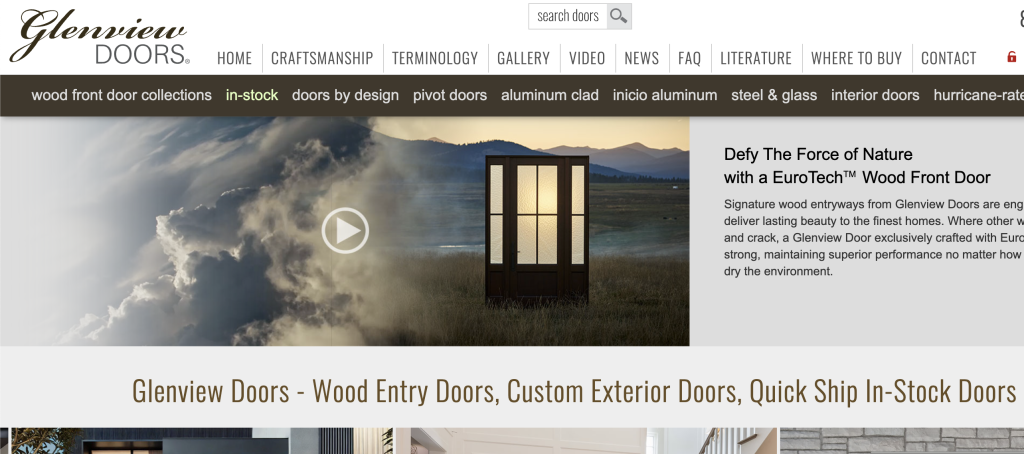
5. Glenview Doors – Distributed Nationally

Best for Luxury Wood Pivot and Custom Entry Doors

Glenview Door

Glenview Doors combines old-world craftsmanship with cutting-edge European technology to deliver some of the most exquisite wood doors available today. Known for their signature EuroTech™ construction, Glenview doors are engineered to resist warping, cracking, and weather damage while maintaining the elegance of solid wood.

Standout Lines

  • Modern Pivot Doors (up to 5 feet wide)
  • Hurricane-rated entry systems
  • Aluminum-clad wood doors for coastal and high-moisture climates
  • Steel and glass designs for modern interiors
  • Classic wood entry doors with rich finishes

Customization Options

From mahogany to walnut and oak, Glenview offers an extensive list of wood species, finishes, and glass inserts. Their Pivot, Modern, and Classic collections can be fully tailored to meet the needs of any architectural style.

Customer Feedback

Glenview is a favorite among architects and high-end homebuilders. Clients appreciate the fusion of craftsmanship and technology. While more expensive than most brands, their longevity, insulation, and aesthetics justify the price.

How to Choose the Best Door Company in Los Angeles

Selecting a door company involves more than just browsing catalogs. Here are some tips to make the right choice:

Assess Your Needs

  • Entry vs. Interior Doors: Some companies specialize in one over the other.
  • Style Compatibility: Consider how the door fits into your home’s architecture.
  • Functional Priorities: Think about energy efficiency, security, sound insulation, etc.

Research the Company

  • Read Reviews: Look for recent, verified reviews with detailed experiences.
  • Check Certifications: Ensure they’re licensed, bonded, and insured.
  • View Showrooms: Visit physical locations to compare materials and finishes in person.

Understand the Process

  • Consultation: Choose companies that offer thorough pre-purchase guidance.
  • Installation: Ask if installers are in-house and trained on specific brands.
  • Support: Look into warranties, repairs, and post-install service.

Frequently Asked Questions

What type of door is best for energy efficiency?

Fiberglass and insulated steel doors often provide the best performance. Brands like Marvin and Andersen offer great options.

Can I customize a door for my home?

Yes. Most top companies offer full customization, including materials, finishes, glass options, and hardware.

How long does it take to install a new door?

It depends on the type and customization. Stock doors may be installed in 1–2 days, while custom orders can take several weeks.

Do door companies offer warranties?

Yes. Top companies offer warranties that may include both the door product and the installation labor.

What should I expect to pay for a new entry door?

Basic doors start around $600–$1,200, while custom luxury doors can range from $3,000 to $10,000+, depending on size, design, and material.

California Contractors License #956355

Leading dealer for Milgard, Andersen, Fleetwood, Marvin, LaCantina, Velux & Windsor.

Working Hours