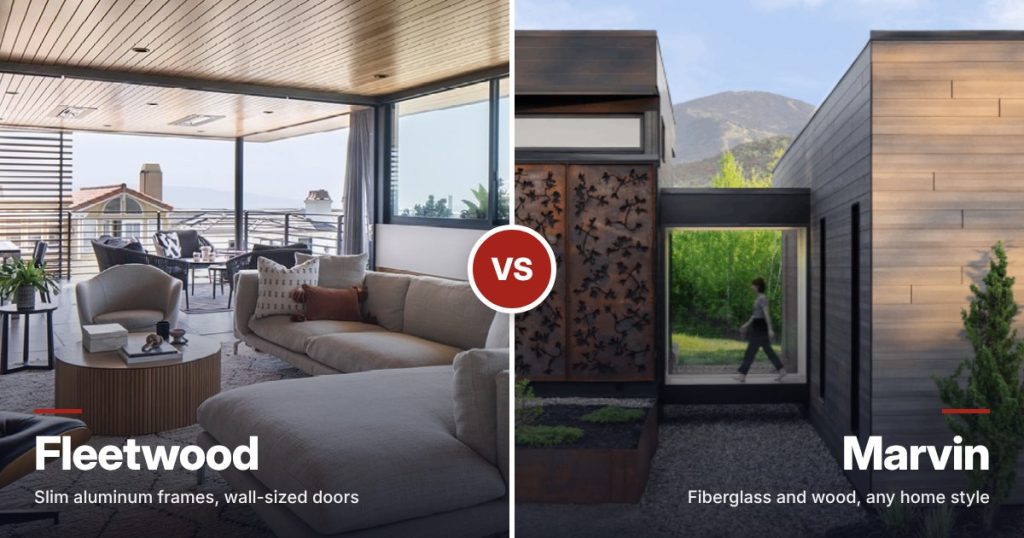
Fleetwood and Marvin are both luxury brands, but they’re built for different homes. Fleetwood makes slim aluminum windows and huge sliding doors for modern homes. Marvin makes fiberglass and wood windows that fit almost any style.
This guide compares the two on materials, design, energy performance, warranty, and cost. By the end, you’ll know which brand fits your home.
Fleetwood vs. Marvin at a Glance
| Feature | Fleetwood | Marvin |
| Main material | Thermally broken aluminum | Fiberglass, wood, or aluminum-clad wood |
| Design style | Modern and minimal | Traditional, transitional, historic, and modern |
| Large glass and sliding doors | Industry leader | Good options, with thicker frames |
| Interior finish | Powder-coated or anodized aluminum | Real wood or fiberglass |
| Frame thickness | Very slim | Medium to slim |
| Price range | High to very high | Mid to very high |
| Best for | Modern homes with big glass walls | Homes that want a warm wood interior |
Fleetwood Windows and Doors
Fleetwood is a California company known for modern aluminum windows and doors. Its products appear in many high-end homes across Los Angeles, Malibu, and the Palisades.
Fleetwood Materials
Fleetwood uses extruded aluminum for its frames. Most of its products are thermally broken, meaning a strip of insulating material inside the frame blocks heat from passing through.
Aluminum is very strong. That strength lets Fleetwood build very thin frames that still hold huge panes of glass.
Fleetwood Collections
| Collection | Tier | What It Offers |
| 3-Series | Entry | Clean aluminum windows and doors at Fleetwood’s lowest price |
| Gen4 | Mid | Better thermal performance and more size options |
| EDGE | Premium | The thinnest frames and largest panels Fleetwood makes |
Fleetwood Strengths
- Very thin sightlines: The frames are slim, so you see more glass and more view.
- Huge panel sizes: Fleetwood’s sliding and pocket doors can span entire walls.
- Strong frames: Aluminum handles wind and large glass loads well.
- Coastal durability: Fleetwood’s finishes and warranty are built for homes near the ocean.
Fleetwood Weaknesses
- No wood interior: The inside of the frame is aluminum, which feels cooler and more modern.
- Less insulation than fiberglass or wood: Thermal breaks help, but aluminum still moves more heat.
- Harder to fit traditional homes: The look suits modern architecture best.
Best for: Modern homes, floor-to-ceiling glass, and large sliding or folding doors. See our Fleetwood windows and doors page for more.
Marvin Windows and Doors
Marvin is a family-owned company that has made windows for more than 100 years. It offers a wider range of materials and styles than Fleetwood.
Marvin Materials
Marvin’s main exterior material is Ultrex, its own type of fiberglass. Fiberglass is very stable and insulates well.
Many Marvin windows also have real wood interiors. You can paint or stain the wood to match your home.
Marvin Collections
| Collection | Material | What It Offers |
| Essential | All fiberglass | Low upkeep at Marvin’s lowest price |
| Elevate | Fiberglass outside, wood inside | Wood warmth with a tough exterior |
| Vivid | Aluminum outside, wood inside | A modern exterior with a wood interior |
| Modern | High-density fiberglass | Slim, aluminum-like lines for modern homes |
| Ultimate | Aluminum-clad wood or all wood | Marvin’s top line with nearly unlimited options |
Marvin Strengths
- Real wood interiors: Elevate, Vivid, and Ultimate give you warm wood inside.
- Strong insulation: Fiberglass and wood block heat better than aluminum.
- Style range: Marvin fits Craftsman, Spanish, farmhouse, historic, and modern homes.
- Many price points: You can choose anything from mid-range to luxury.
Marvin Weaknesses
- Thicker frames than Fleetwood: Even Marvin Modern can’t match Fleetwood’s slimmest profiles.
- Smaller maximum door sizes: Marvin makes great doors, but not the wall-sized sliders Fleetwood is known for.
Best for: Traditional, transitional, and historic homes, and anyone who wants a wood interior. Learn more about Marvin windows, or read our full Marvin windows review.
Features: Design and Style
Your home’s style is the biggest factor in this choice.
Frame Look and Sightlines
Fleetwood frames are very thin. On a modern home, this makes walls of glass look almost frameless.
Marvin frames are wider but still clean. Marvin Modern comes closest to Fleetwood’s look.
Interior Feel
Fleetwood interiors are metal, in powder-coated colors or anodized finishes. They feel sleek and modern.
Marvin interiors can be real wood. This adds warmth, which many homeowners want in living rooms and bedrooms.
Large Doors and Glass Walls
Fleetwood is the leader in big sliding, pocket, and multi-slide doors. Its systems can open a whole wall to your patio.
Marvin makes sliding and folding doors too. They work well for standard openings but don’t reach Fleetwood’s sizes.
If you’re planning a large opening, compare these with LaCantina doors as well. Our guide on French doors vs. sliding doors can also help you choose a door type.
| Design Factor | Fleetwood | Marvin |
| Thinnest frames | Yes | No |
| Wood interior | No | Yes |
| Wall-sized sliding doors | Yes | Limited |
| Traditional styles | Limited | Yes |
| Custom shapes | Some | Many |
| Color choices | Many powder-coat colors | Many exterior and interior colors |
Efficiency: Energy Performance
Both brands can meet California’s energy rules. But they get there in different ways.
How the Frames Compare
Aluminum moves heat more easily than fiberglass or wood. Fleetwood uses thermal breaks to slow this down.
Fiberglass and wood are natural insulators. That gives Marvin an edge in frame performance.
How the Glass Compares
The glass matters more than the frame for most windows. Both brands offer dual-pane Low-E glass, and both offer triple-pane on select products.
With the right glass, both brands perform well in Southern California heat.
| Energy Factor | Fleetwood | Marvin |
| Frame insulation | Good (thermally broken) | Very good to excellent |
| Low-E glass | Yes | Yes |
| Triple-pane option | Select products | Select products |
| Meets Title 24 | Yes, with the right glass | Yes, with the right glass |
Title 24 Requirements
California’s Title 24 energy code limits how much heat windows can let in and out. Most new windows need a U-factor of 0.30 or lower and an SHGC of 0.23 or lower.
You can read the rules on the California Energy Commission’s building standards page. Big glass walls make glass choice even more important, so ask your installer for the NFRC label on every unit.
The Department of Energy’s guide to window types and technologies explains how frames and glass affect comfort.
Durability and Warranty
Both brands build long-lasting products. Their warranties are set up differently.
| Warranty Area | Fleetwood | Marvin |
| Frame | Transferable lifetime frame warranty | Up to 20 years, with longer coverage on some Ultrex parts |
| Glass | 10 years on most products | 20 years |
| Coastal coverage | Special coastal warranty on finishes | Standard coverage, with coastal options |
| Transferable | Yes | Yes |
Warranty terms change by product and by year. Ask your dealer for the current warranty sheet before you buy.
Coastal Homes
Near the ocean, salt air attacks metal finishes. Fleetwood’s finishes and coastal warranty are made for this.
Marvin’s fiberglass doesn’t corrode, which also makes it a strong coastal choice.
Value: What Fleetwood and Marvin Cost
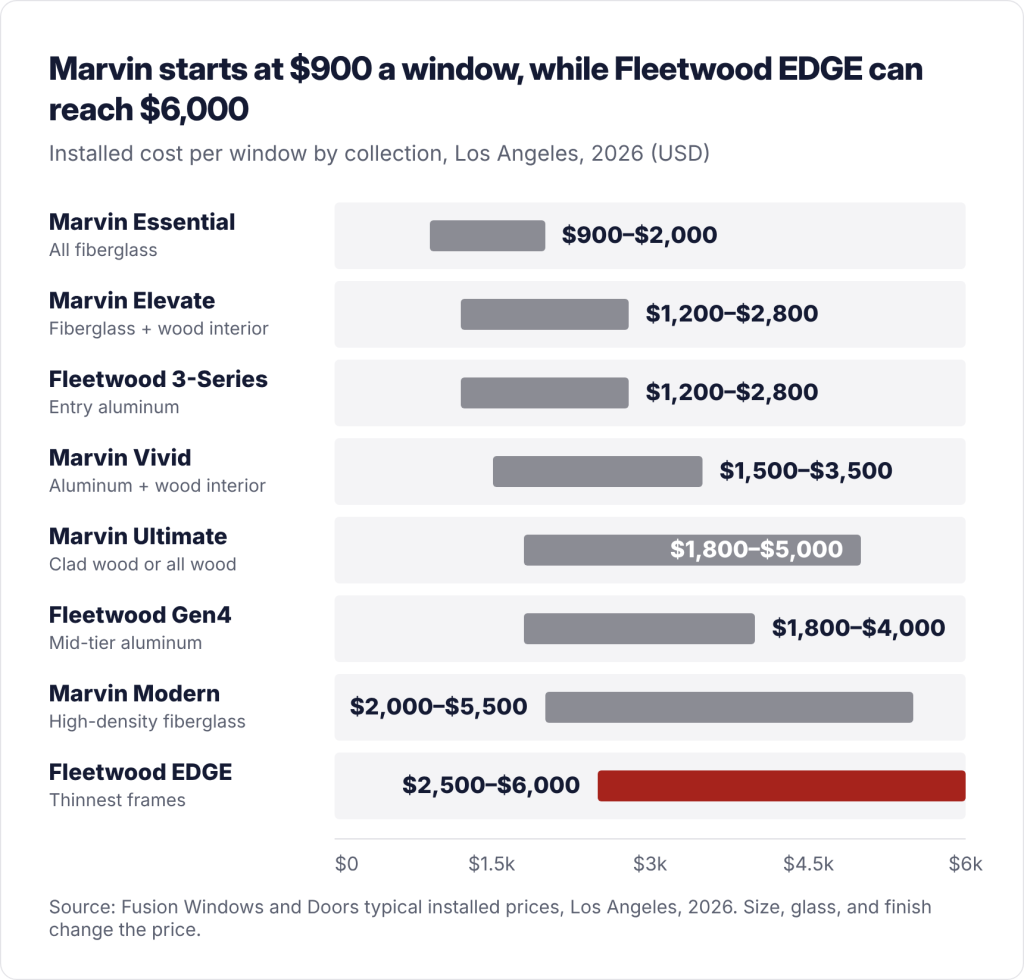
Both brands are premium, but Marvin starts at a lower price. These are typical installed prices for Los Angeles homes.
Window Cost by Collection
| Brand and Collection | Min Cost (per window) | Max Cost (per window) |
| Marvin Essential | $900 | $2,000 |
| Marvin Elevate | $1,200 | $2,800 |
| Marvin Vivid | $1,500 | $3,500 |
| Marvin Modern | $2,000 | $5,500 |
| Marvin Ultimate | $1,800 | $5,000 |
| Fleetwood 3-Series | $1,200 | $2,800 |
| Fleetwood Gen4 | $1,800 | $4,000 |
| Fleetwood EDGE | $2,500 | $6,000 |
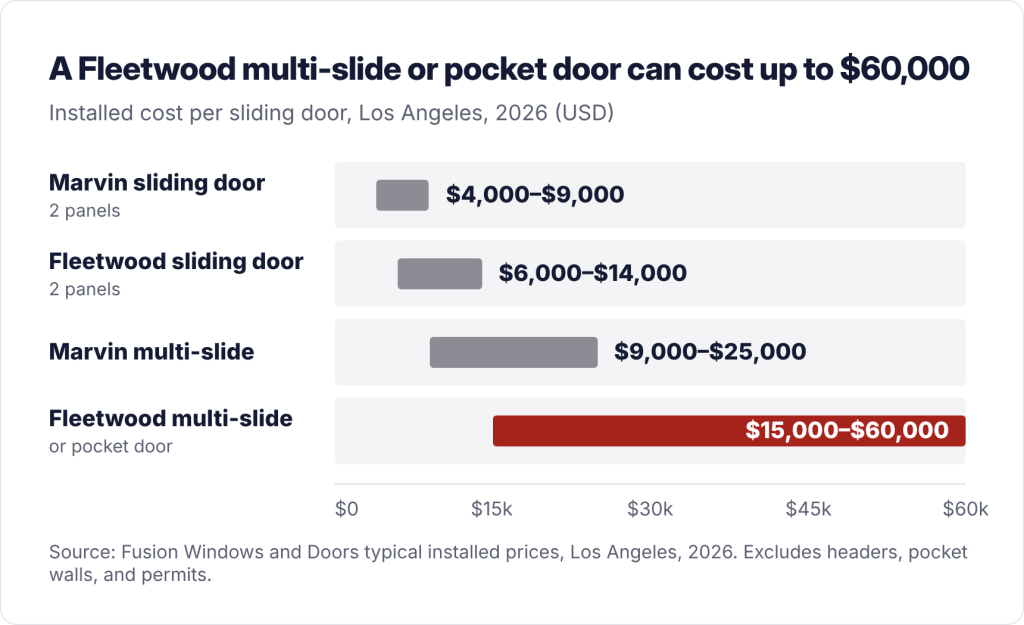
Sliding Door Cost
| Door Type | Min Cost | Max Cost |
| Marvin sliding door (2 panels) | $4,000 | $9,000 |
| Marvin multi-slide door | $9,000 | $25,000 |
| Fleetwood sliding door (2 panels) | $6,000 | $14,000 |
| Fleetwood multi-slide or pocket door | $15,000 | $60,000 |
For a full breakdown, read our guide to Fleetwood windows and doors cost.
Hidden Costs to Plan For
| Hidden Cost | Min Cost | Max Cost | When It Applies |
| Structural header for large openings | $2,000 | $10,000 | Wide sliding or pocket doors |
| Pocket wall construction | $3,000 | $12,000 | Pocketing door systems |
| Stucco or siding repair | $300 | $900 per opening | New construction installs |
| Permit | $200 | $1,500 | Structural changes and most new openings |
| Crane or special handling | $500 | $3,000 | Very large glass panels |
Which Brand Gives Better Value?
Marvin gives you more choices at lower prices. It’s the better value for most traditional and transitional homes.
Fleetwood costs more, but nothing else matches its slim frames and huge doors. For a modern home built around big glass, it’s worth the price.
Which Should You Choose?
Choose Fleetwood If:
- You have or are building a modern, minimal home.
- You want floor-to-ceiling glass and very thin frames.
- You’re planning a large multi-slide or pocket door.
- You like a sleek metal finish inside and out.
Choose Marvin If:
- You have a Craftsman, Spanish, farmhouse, historic, or transitional home.
- You want real wood on the inside.
- You want strong insulation from fiberglass or wood.
- You want premium quality at a wider range of prices.
Using Both Brands Together
Many LA homes use both. A common mix is Marvin windows throughout the house and a Fleetwood sliding door on the back wall.
This gives you warm interiors in most rooms and a dramatic glass opening where it counts.
Get Help Choosing Between Fleetwood and Marvin
Fusion Windows and Doors is an authorized dealer and installer for both Fleetwood and Marvin. We’ve installed high-quality windows and doors in Los Angeles for more than 20 years. Get a free quote and we’ll help you compare both brands for your home.